• Love Yourself

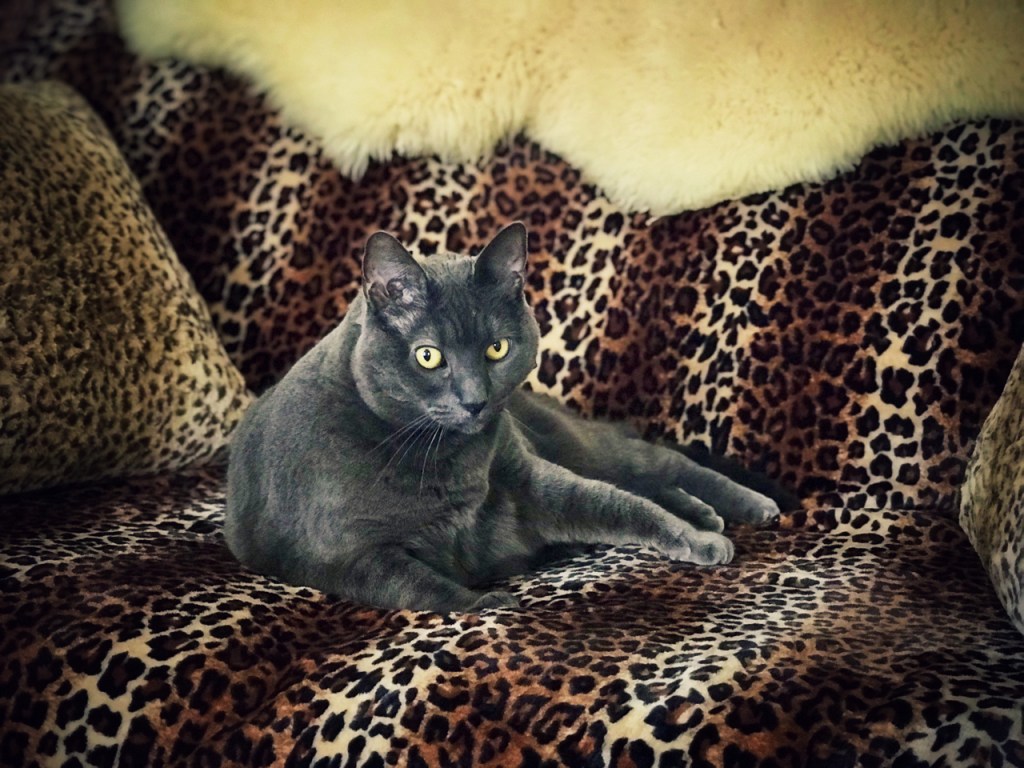
    Imagine this, a woman of a certain age hears a message in her meditation to pack up her SUV, including her yellow-eyed cat, and make her way south during a worldwide pandemic. Despite living comfortably in a pastoral setting with like-minded friends, she heard the voice and chose to answer.

    More importantly, this woman settled in a small town in North Carolina, where her inner voice had led her.

    Some may call it Intuition, while others will claim she was bat shit crazy.

    Regardless, sometimes you must shut down your ego-mind and listen to intelligence. And that’s just what I did.

    I cannot say it was easy and that I didn’t question, have my doubts, and wonder where all of this was leading. I had begun the journey to share the Mindful Mandala cards with anyone who would listen and found myself a stranger in strange towns with few who wanted to hear what I had to say.

    Enough, said I, a job is what I need, one that will introduce me to this creative community. Like a guiding star, my intuition led me to a fashion boutique where I boldly stepped up to the counter and asked if they were hiring. Understand that I have been self-employed for the past 30 years. Therefore, I am unaccustomed to working a salaried job. Plus, I was to become a “stylist,” dressing women’s outer selves after years of addressing their inner health as a nutritional counselor. Who knew. I took to it like a fish to water.

    The pandemic has touched us with loss, fear, uncertainty, death, and insecurity—no more soothing heart hugs between friends, plus the dreaded weight gain.

    Big bellies are all the rage.

    I say this in a fashion sense because women come to the boutique looking for something to cover the results of two years in isolation. There was little to console them besides chips, wine, and pizza. I do my best to drape, elongate, and encourage the appreciation of a woman’s curves; for some, this works. The evidence is too pronounced for others, and only months of dietary restrictions will appease.

    Over the months, I heard a mantra of body parts a woman hates, rejects, ignores, abandons, and can no longer tolerate. I imagine I am at peace with my physical changes, although I avert my eyes when passing a mirror naked. It was a moment of surprise to realize that age has such a decisive say despite all I do to stay fit and healthy.

    Women over a certain age do not want to show their upper arms once the skin grows loose and hangs in unattractive drapes. When solid triceps turn soft, biceps flatten, forearms wear the marks of too much sun, and knees, well, that’s a whole chapter in itself. Likewise, women complain that they have hips that are round and full. I point out that these are the curves that make us women. Breasts receive the same scorn:

    “I look like a cow.” Said one well-endowed woman in a fabulous v-neck peasant dress.
    “No,” I replied, “not udders, beautiful breasts that deserve your love.”

    Women come in all shapes and sizes, colors and tones. We wear our pasts like armor. We seek to look beautiful. We drape ourselves in body concealing clothes and hang gold or silver from our necks, ears, wrists, fingers, toes, and ankles. If we don’t love it, we can change how we look. We pierce body parts, tattoo our skin, spend time and money on our hair, polish our nails, and shape our face, breasts, bellies, buttocks, and even the bunions on our feet.

    From these observations, the Mandala Talismans were born. The Mindful Mandala cards are a tough sell unless you are used to consulting the Self, using oracle or tarot cards, the Runes, or iChing. These forms of divination are questions to a more profound sense of what you already know. Slowing the constant chatter in your ego-mind allows intelligence to quickly reveal the key to resolving negative emotions. Reminding yourself of the emotions running you is how we can prevent going down a dark rabbit hole of negativity, especially when critical of our beautiful bodies. Wearing your emotions, in this case, around your neck is the antidote, and they are the ideal plumage for enhancing your most attractive attributes.

  • My Journey

    I’ve been on this “world tour” almost a year. This journey has taken me from New Jersey to Tampa to Jacksonville Beach, and now to North Carolina. I have been sharing the power of the Mindful Mandala cards with people I meet along the way. Now, I find myself living in a small town in North Carolina. I am once again a stranger to the community and wonder what propelled me to leave home to follow this path.

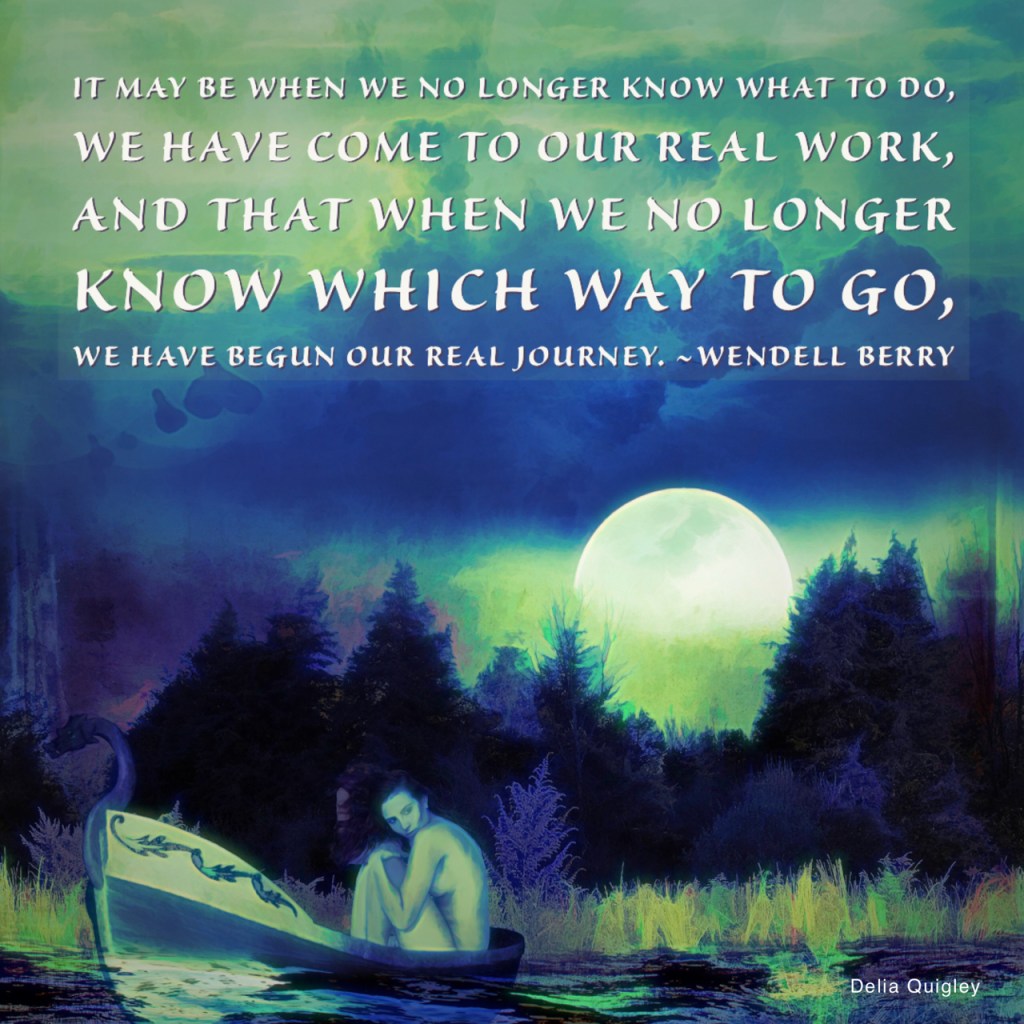
    I am being stripped of all the labels I used to identify what I do, who I am, how I appear to others. And that, it appears, is exactly the reason for this journey. Yesterday I came upon this phrase from a Wendell Berry poem. It felt as if he wrote it with me in mind. Sharing our stories with others is the tie that binds us all together, and just may save our species.

  • Quarantine in the Age of Covid

    March 15

    New Jersey goes into strict lock down
    I’ve been living on a six-acre farm alone
    The family returns home to quarantine
    I am relieved of my daily chores
    Instead, I take long walks in nature
    Bustling country roads are now empty

    It is an eerie feeling walking along
    The jagged road’s edge, stepping out
    To get a good stride on a spring morning
    A fox or raccoon has left piles of scat
    Before leaping in front of headlights
    To dash across the darkened roadway

    At first, this emptiness seems a holiday
    Foisted upon an unsuspecting populace
    When it extends for days into weeks
    I grow comfortable with the change
    External noise and stimuli focus down
    My circle narrows to close surroundings

    I go out to the barn and extend the hose
    To fill the baby pool with fresh water
    Princess goose loves a fresh, clean bath
    And the grown gosling stands guard
    Against any invasion from the ducks

    The Presidential election is electric
    Political signs decorate the roadside
    The best one reads as truthful humor

    Dogs
    2020
    Because Humans Suck

    I nod my head in agreement and
    Face the reality of this pandemic
    There is nowhere for me to go
    No excuses left for not finishing
    Quarantine is forcing me to sit still
    Right alongside the rest of the world
    Singing love songs from balconies

    The internet is awash with videos of
    Wild animals wandering deserted towns
    Delighted to splash in cool fountains
    Bears free to pick through fresh trash
    Mountain goats strolling cobbled streets
    Where crowds of tourists once trampled

    The air once again clear in New Delhi
    Reveals the forgotten Himalayan peaks

    I send the work off to be published, then
    Turn to build a Mindful Mandala website
    Time to put the proverbial cards on the table
    I feel called by consciousness to ante up
    Fate waits for no one on a Hero’s journey


  • THE AGE OF COVID BEGINS

    March 1, 2020

    Bad news arrives in a text message
    My beloved uncle Ed has left his body
    His was a good life though not without
    Trials and tribulations a long life entails
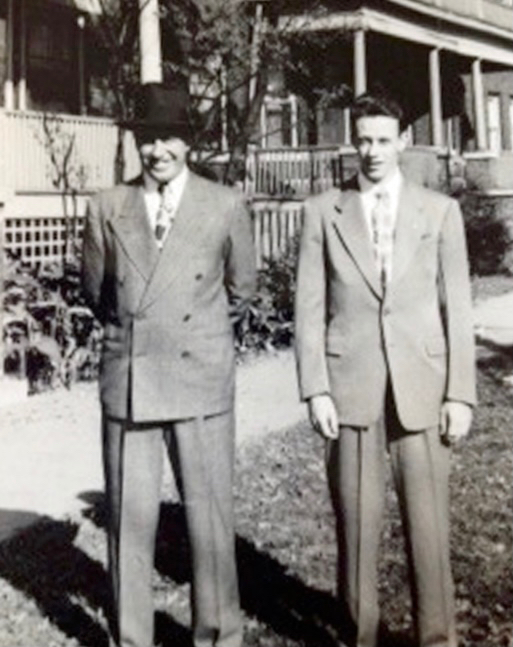
    He adored my father, his hero in life
    When death took their father, my dad
    Stepped in at seven to go out to work
    The Great Depression made men of boys

    Ed’s wake will be a mourning celebration
    As befits a Knight of Columbus, father,
    Grandfather, great grandfather, husband
    Community dad to his children’s friends
    He cheered them on then drove the kids
    Home after stopping for a burger and fries

    I call my brother, he’s at an airport
    Waiting in Houston for a flight to LA
    He agrees to meet me in New Jersey
    I feel better knowing he will be here

    A proper Irish wake is not to be missed
    It can go on for days and long nights
    A warm-up to the deceased’s funeral
    A feast of food and drinking to follow
    With stories, laughter, and bad jokes

    We’ve been warned of a strange virus
    A grim reaper of death in the air
    But in our minds, we are invincible
    So we party on remembering Eddie
    Sharing stories while speaking kindly
    Of the dead who may still be near

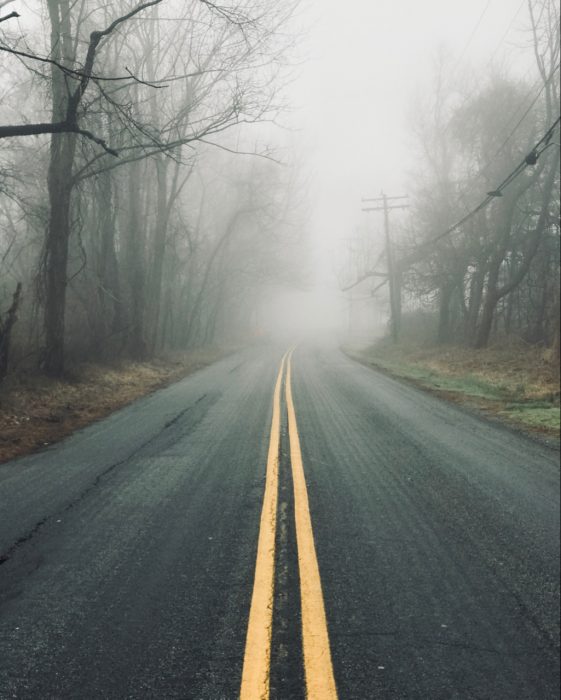
    Post funeral, I wake to fog outside
    I tell my brother to dress for the chill
    I’ve had a vision and need his skills
    I drive us to a deserted train track
    And ask him to kneel down between rails
    I blindfold him and walk to my camera
    I call out that a train can be heard nearby
    He lifts his head slowly as I fire off shots

    He departs for the airport after breakfast
    Suddenly I am tired with aches and chills
    I sleep for three days, unable to stand up
    I know this is not the flu or a spring cold
    This exhaustion is something different

    On the fourth day, I rise from warm covers
    Return to work publishing and printing yet
    I sometimes wonder if the Covid-19 virus
    Paid me a visit, only touching down gently
    And not finding a place to lodge departed
    Months later, I test negative for the virus

  • Tampa in the Time of COVID

    Tampa

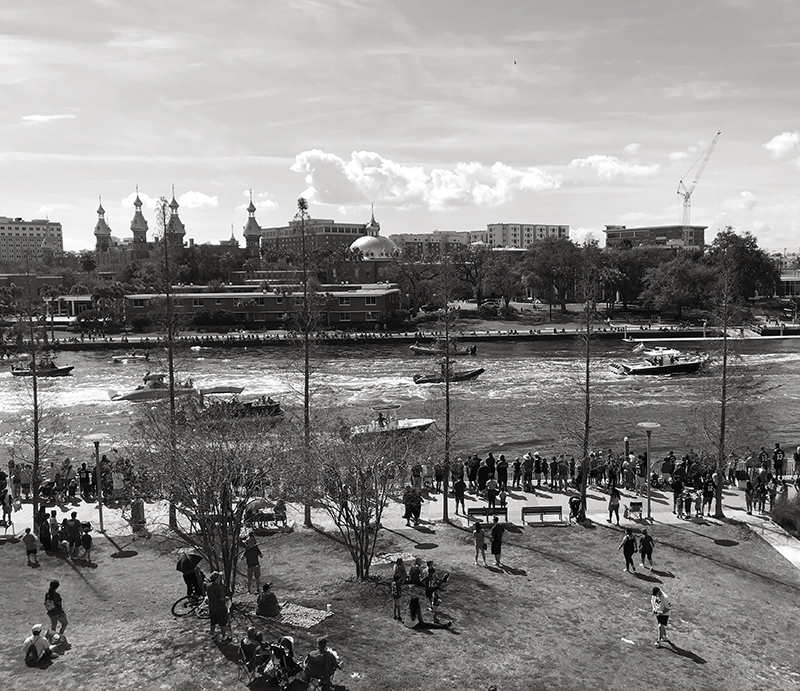
    I leave for forty years and return
    To find you’ve grown wide, long and leggy
    Cars speed by Daytona 500 fast, dangerous
    Streets, sidewalks, malls, everywhere crowds
    People from all parts of America here
    Come to see the Bucs, the Rays, the Bolts
    To be part of this first championship season
    But the bulldozers tore the heart out of you

    Women talk of stock market trends
    Brag about money they have garnered
    So much glorious cash for doing nothing
    On street corners, homeless men, women
    Vie to beg under the blazing winter sun
    I feel envy, resentment, indifference, anger
    What corporation is the money invested
    In hot investments heating up the planet

    Three thousand a day pour into the state
    To set up house and stay a lifetime
    Apartments go up one next to another
    A honeycomb of cells maxing infrastructure
    This new Tampa is not for the old and infirm
    Young, active, running, biking, out in cafes
    Walking dogs, masked feminine male faces
    Paying top dollar for a t-shirt with pirates logo

    I remember a hot sleepy town moving slow
    A brief stop on the way south to the beach
    Not much to brag about except the arts
    Tampa as an old boys club wanted more
    First football, soccer, baseball until forty years
    Later champions walk the streets buy bling
    In the dying malls, Latin X, African American
    Fashion shaped by nouveau riche athletes

    Elders forced to retire by this pandemic
    To old trailer parks with a waiting list
    As death occurs on streets named for birds
    The migration south is too fast to keep up
    To house, clothe, feed, the masses leaving
    Behind crippling ice, snow, rain, and fire
    Why stay when you can bike along the bay
    A chic face mask tucked into spandex tights

    I do not witness a raising of consciousness here
    I see a divide between classes of people widen
    There is a growing hunger for truth to be revealed
    Somewhere a surgeon cracks open a patients chest
    Finding a heart weakened from fear of contact
    Human nature blind to the cause that love is all
    And without love, we become a violent people
    A race led by war, domination, and blood lust

  • Migration in the Age of COVID

    I.
    I drive out of New Jersey November 2020
    My migration south has begun
    The Rav4 is packed tight top to bottom
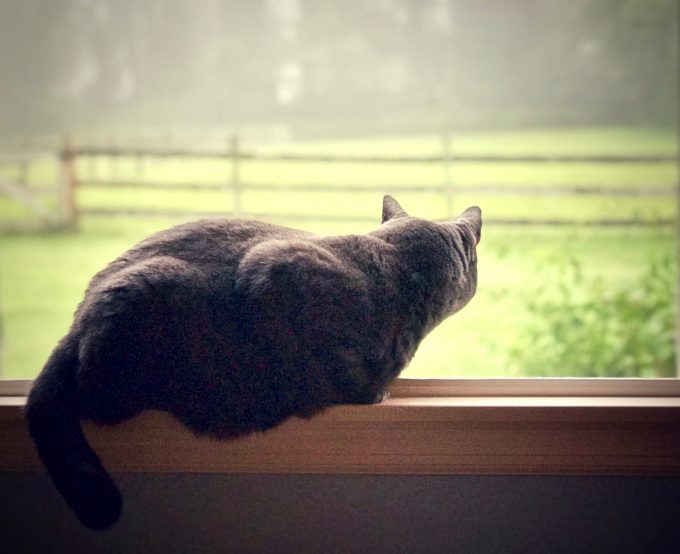
    My cat Tessa lays curled inside a travel crate
    She is not eager to leave her warm bed
    But she has no say in the matter
    Once a fearless hunter of small animals
    She now lays passive, unsure of my purpose
    We seem to be of one mind on that topic

    Two winters on a farm with ducks and chickens
    I publish a book of songs, poems, and stories
    A boxed set of self-inquiry mandala cards
    I make plans to buy an RV and hit the road
    Introduce my books and cards at yoga studios
    Then COVID migrates to America’s shores
    Landing in my backyard shifting plans, dreams
    Spring, then summer comes and goes
    I share stories and tell the ducks my dreams

    October arrives with COVID still active
    Time to pack and brave the journey
    A strong north wind blows a warning
    In a field of gold and purple wildflowers
    I feel the arctic chill beginning to form
    If I stay here, the winter will break my spirit
    Already a vast migration is crossing America
    From north, south, east, and west, they travel
    All headed to an easy life in the tropical sun

    I pack, move treasures to storage, say goodbye
    I announce the Mindful Mandala World Tour
    Six workshops done, my story told, cards shared
    Women recognize dark emotions as they rise
    Out of despair into hope, from sadness to joy
    St. Francis’s prayer evident as my life purpose
    Across centuries his words tap into my heart
    Reveal ancient wisdom with a new understanding

    My oldest friend expects me by week’s end
    First, a few stops to make before Christmas
    I steer clear of crowded rest stops, wash hands
    Drive through the day, become lost on back roads
    Stop in Virginia, where Trump-Pence signs linger
    Strangers are cautious, wear masks, won’t hug
    No protocol for guests in their sterilized home
    Unable to offend in the face of a raging pandemic

    And so begins, In the Age of COVID, a series of observations and stories.

  • Your Book Is Published, Now What?

    You’ve probably read a similar headline when Googling what to do after publishing your book. All the research, frustrations, sleepless nights, draft after draft, stops and starts finally paid off; it’s done, out in the world, but why isn’t everyone rushing to buy a copy?

    Suppose you have a large publishing company behind your efforts. In that case, the publicity machine is grinding its gears with publicists sending out book copies, submitting for reviews, awards, and setting up interviews for you on T.V. and radio. However, if you self-published your book, none of that will happen unless you do it yourself. There are legions of writers who have turned to teach “how to market” your book online. Some of them have been successful with the book they wrote, but time stands still for no writer.

    In today’s world of copy, you are only as good as your next book, next post on social media, next round of likes, and favorable comments.

    Keeping up with all of that requires a publicity department the size of Penguin Books or Harcourt Press. Even then, the job may not get done right. Your years of work may languish on Amazon, a dinosaur after a year, and ripe for the picking of some up and coming looking to repurpose your work and put it out there as their own.

    Meanwhile, all you want to do is write, create, get back to doing what you do best. However, here’s the problem. Your focus now has to go towards marketing to book sites, posting on social media, getting lost in answering questions and comments on someone else’s book, so you can garner attention and hope they comment favorably on your page. Ideas swirl around in your head; you make notes for the next book and the next. You put together a proposal to send out to agents hoping to get a ride on one of those big publicity machines. Still, the wait is endless. Millions of other writers with plots about demons and aliens, abductions, murder, war, mayhem, or just a simple boy meets girl; boy meets boy, she meets vampire, they meet their, are circulating like planes stacked up overhead ready to land. How many more ways can there be to lose weight and keep it off? How many self-help books will add anything more to the conversation? It doesn’t matter. Someone will always have another perspective, a different way to say the same thing, so if that’s you, then go for it. Now to get people to read what you’ve written. Although you thought that writing was your full-time job, be clear that it is not.

    Marketing and innovation are the key factors in any successful business.

    That’s what Tony Robbins says to his millions of social media followers who want to follow in his footsteps and become a mega-star with a full-time publicity staff cranking out the Facebook, Instagram, Twitter, YouTube posts 1-2-3. How can you compete with that? I wish I could tell you. Yeah, I know, you’ve read this far expecting that golden nugget of information that will miraculously propel you to the forefront of the book publishing world, but wait, I’m no tease.

    There are formulas you can follow if you want to market your book. Plus, there are book companies with in-house publicity departments to assist the self-publishing author. They come at a price, but then so do you. I had a well-designed plan for marketing my books and Mindful Mandala cards, then a pandemic hit like a tsunami, and the world changed; I changed and kept changing, as has the internet. Social media has become a labyrinth of artists, authors, and business ventures hitting the screen with one advertisement after another. People are buying, selling, trading all from the disruptive comforts of home. How do you stand out and get noticed? Yes! You post a video on Facebook or YouTube, camera right up in your face, low light, out of focus, hair a mess, glasses askew, and the viewer seeing mostly your white ceiling, but you’re there, someone can see you for god’s sake, and maybe buy your book. Not just buy it, but love it, share it, help it to go viral.

    After all is said and done, all the blogs and tutorials on how to market your book, the number one key to success is…wait for it…word of mouth.

    Amazing, right? Talk it to friends, give away copies, then follow up to answer questions, like how they can buy more copies. Convince your aunt to get her book club to read it, voice record excerpts and post them online, take what you can from all the “how to market books” articles, and find what you are willing to do to encourage people to buy your book. Make it easy for them to find it online, or keep a few copies in your car. I keep three boxes of Mindful Mandala cards in my SUV. We’re still in a pandemic though, and socializing continues to be limited. Yet I talk it to people when they ask what I do or to friends when they want to know what I have been up to, having disappeared over two years ago only to suddenly resurface with a new book and a set of Mindful Mandala cards. At least you have something to talk about other than make small talk.

    Create interesting photos of your book and post on Pinterest, and Facebook. Feed your Instagram account, but don’t overdo the postings. 3-4 times a week keeps people interested. Here’s a few examples that have motivated viewers to click through to the website and sales. This first image is one I posted to Pinterest with the link to purchase The Body Rejuvenation Cleanse book.

    The second image was sent to me by a happy and satisfied Mindful Mandala card customer after opening her package. I used it as a post on Facebook.

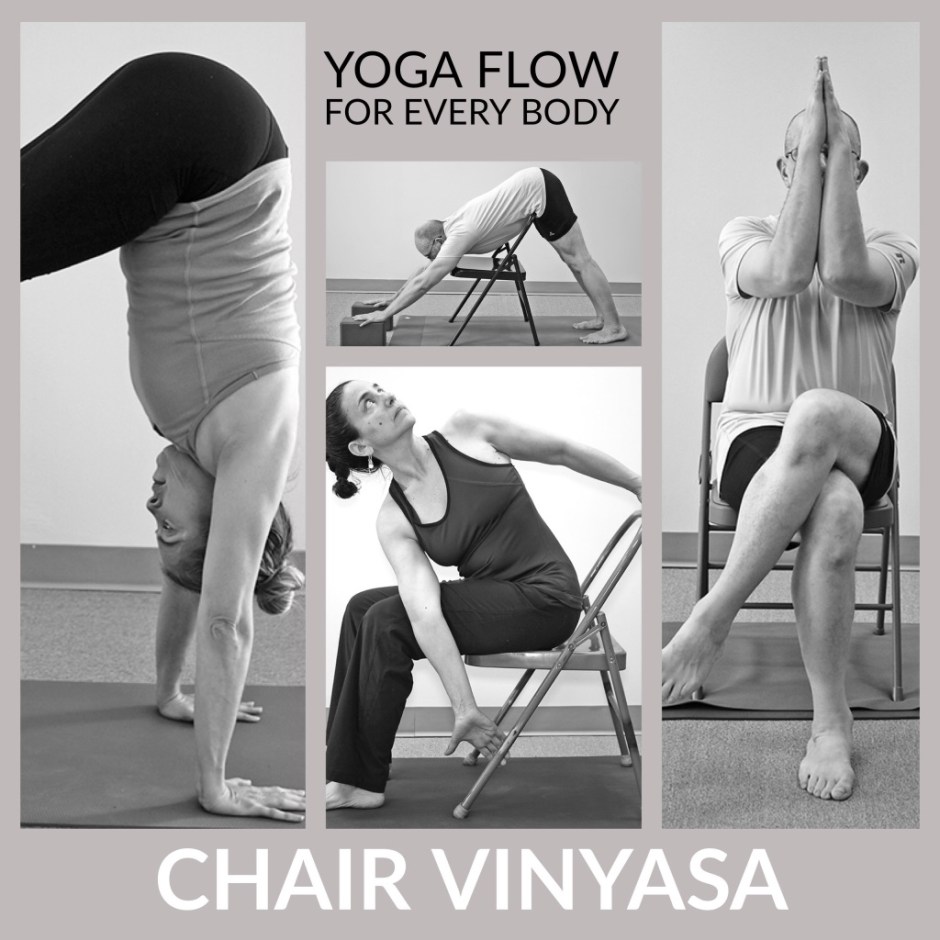
    For Chair Vinyasa I put together a collage of photos from the book and posted on all the social media sites.

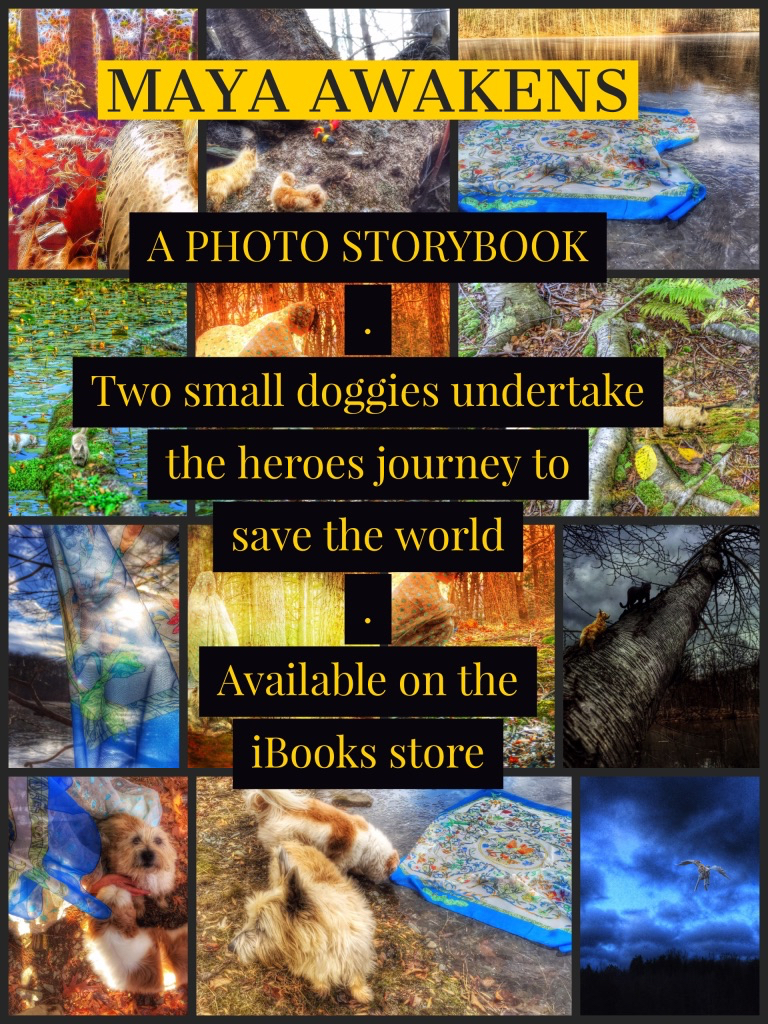
    And I did something similar for my photo storybook, Maya Awakens.

    Most importantly, speak about your work with passion. Get people excited about what you’ve created; tell them your story, how you got the idea, the long road it took to become published. If they are still listening, then entice them with a sample of the plot, pull out the book and mention you “just happen to have a copy with you.” Make them want to read what you’ve written.

    You are and always will be the best salesperson for your creative work.

    We are all of us rethinking our entrepreneurial lives within the cocoon of this pandemic. What happens later will have its twists and turns. Having self-published four books and one set of Mindful Mandala cards, I have found that if you don’t speak up about your work, no-one will know, and if you are doing it just for yourself, well, then that’s your kink and no complaining. If anything, the internet has become our place to communicate to the world, so share, share, share your work, and make sure your audience knows where to buy your amazing, next New York Times bestseller. Good luck.


  • INTERVIEW: Deborah Reid

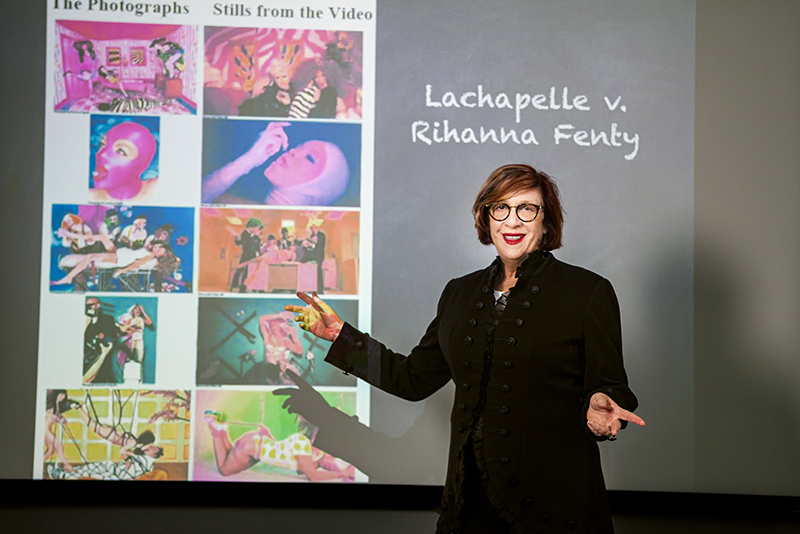
    Sometimes when you meet a person for the first time, there is an immediate connection. When introduced to Deborah Reid, I had the feeling of meeting a like-minded artist who is passionate about the work she does as a lawyer and her activist work as an artist. What a great combination of talent and intelligence.

    Deborah Reid is an accomplished artist and an AV rated attorney with over 36 years experience. She is passionate about sharing her knowledge and providing support to other creatives. She is a seasoned federal practitioner and is admitted to the bars of Florida, California, New York and New Jersey. Deborah is the author and presenter of Law: Artfully Explained Seminars which include Copyright or Wrong?, That’s (not) Fair, Contracts for Creatives and Art Speaks!.  The seminars translate legal concepts into images and educate artists on areas of the law that impact their careers.


    She is also passionate about our need to Vote, and much of her art, in the moment, is focused on reminding individuals of their responsibility. I asked Deborah to tell us about her life as an activist and artist.

    How would you describe yourself as an artist?
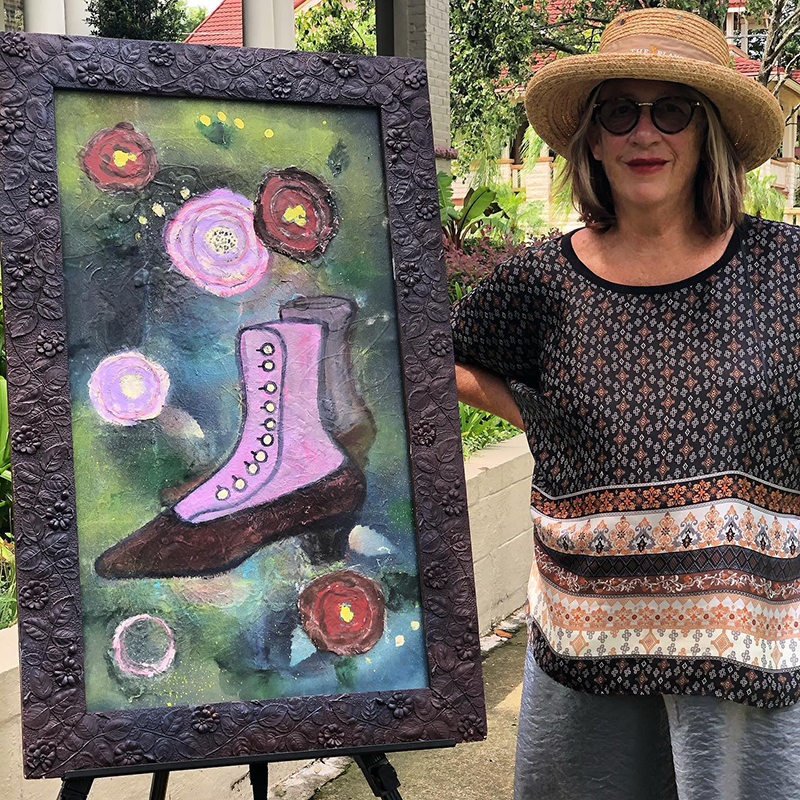
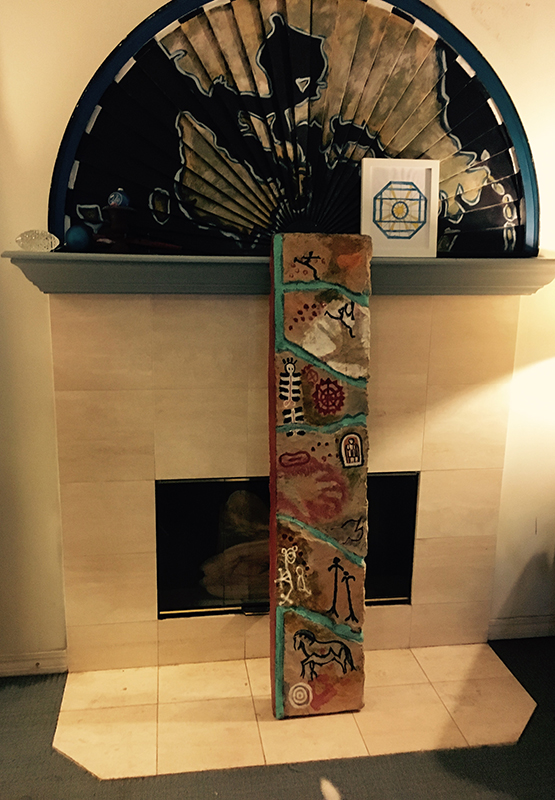
    I am a lifelong painter, print-maker, and occasional installation artist. My current body of work is largely illustrative with a pop art sensibility. I work in chalk paint for color saturation and add water-based oil for nuance. I sometimes use architectural salvage as a canvas. I like to print on related text from newspapers and pages of old books. I often create work that is not only visually pleasing but also conveys a message.


    I believe that artists can shed light on issues that are tempting to tune out in other media. We don’t have to lecture; we can illustrate.

    Has your art changed over time? Where are you now in your creative process?
    My work and my creative process have changed. My process is more relaxed and playful. The work reflects that change. I usually have a direction rather than a destination in mind. I am not a perfectionist in my artistic endeavors. My work has become more political and message-driven. Several years ago, I made a choice to turn away from landscapes and flowers. I have something to say.


    I am encouraged by artist/activist Ai Wei Wei’s direction to “Respect yourself and speak for others. Do one small thing every day to prove the existence of justice.” I can manage that.

    Did you grow up in an artistic family?
    Yes. I come from a long line of stitchers on my mother’s side. My great-grandfather created intricate, free-form embroidery from metallic brocade threads collected from the silk mills where he worked. My mother, grandmother, and aunt were always sewing, embroidering, or crafting something. Although they did not define themselves as artists, they taught me a lot about color and composition.


    I used to paint in the basement with my father when I was a kid. Art kept us connected over the years. My father had Alzheimer’s, and we lived far apart. He sent me watercolor mandalas that he painted. I sent him pictures of my paintings. Art allowed us to communicate when my father could not find his words.

    How did you satisfy your creative nature while working full time?
    During the first part of my legal career, I worked long hours, and my creative nature was not well nourished, although it usually rose to the surface. I once bought a wardrobe of very tailored conservative business clothes, which I wore with royal blue tights and red boots. I also managed to do a few art projects a year. I made a lot of baby quilts and did some watercolors.

    What creative work did you love doing the most, and why?
    I love to paint. I have painted all my life and am very comfortable with the medium. I like to play with colors, shapes, and messages. I enjoy translating intellectual concepts into images and combining my two skill sets. Things get juicy in the overlap.


    My most recent works focus on the right to vote, our most fundamental right. I have created complicated pieces examining structural disenfranchisement and simple pieces celebrating the right to vote.


    How do you share your art today with others?
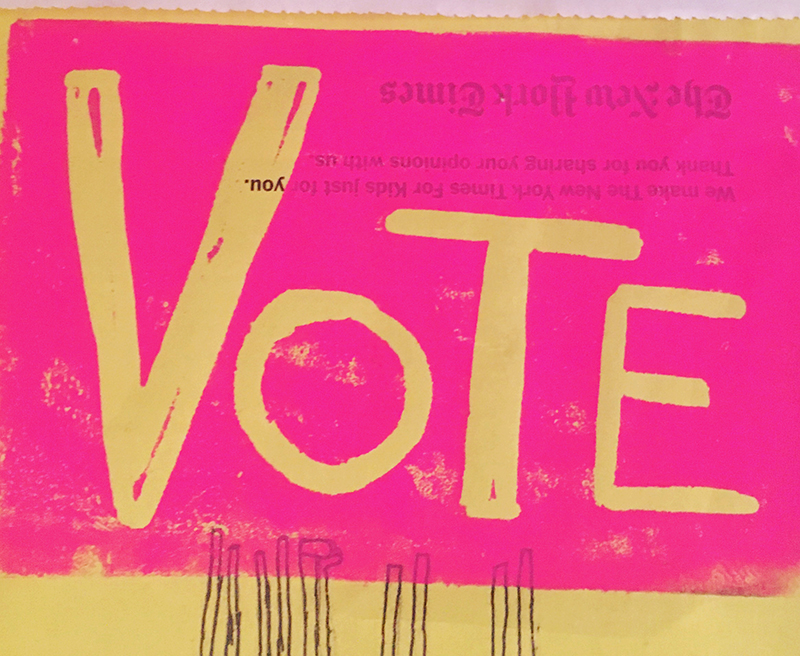
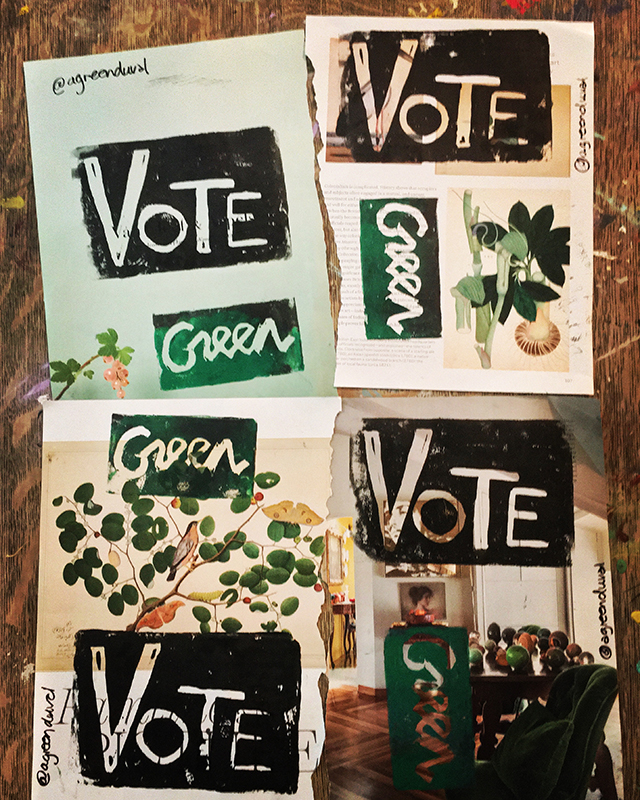
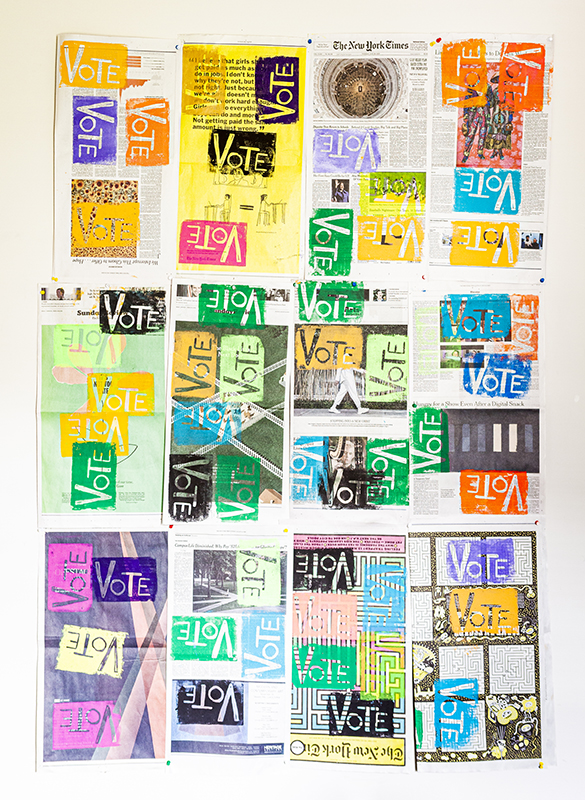
    I see most of my work as part of a conversation. I like to share it with others and hear what they see in it. Earlier this year, I did a linoleum cut of the word VOTE. I have printed VOTE on newspaper pages with bright graphics hundreds of times. I have printed them in every color but red or blue for a fresh take. I hope to cheerfully encourage others to exercise their franchise.


    I have hung the VOTE prints with clothespins on a rope in public areas and invited people to help themselves. I have photographed them, posted them on walls and social media, and will continue to do so.

    Dear Readers,
    Feel free to post and repost the VOTE images in this piece and VOTE!

    What intrigues you the most about the creative process?
    I am awed by the power of visual art. Think of how Dorothea Lange’s Migrant Mother or 1972’s Blue Marble from NASA shaped the way we collectively see ourselves and the world. I am currently thinking about and researching what creativity actually is for a book I am writing on copyright law and visual art. I am intrigued by how difficult it is to define many concepts we talk about freely. For example, what is an idea?


    Looking back, would you have lived your life differently?
    No.

    What would you say today to your younger self?
    Worry less.

    What would you say to young artists coming up in the world?
    Art has saved my life and sanity on more than one occasion. Don’t lose what you love about doing art.


    To contact Deborah Reid:
    http://www.reidartlaw.com
    reidartlaw@gmail.com


  • Plagues I Have Known

    This month of quarantine has me remembering my past, particularly the mid 80’s when cancer was becoming a household name. In 1955 Rachel Carson signaled the first warnings that the chemicals we were introducing to the environment could cause cancer. Today Americans are exposed to roughly 80,000 chemicals on a daily basis, and 10 million people die of cancer annually. Cancer is a plague of major proportions, but we have accepted the disease as a part of living in these modern times. So, plague #1, and here’s the first story.

    I was working as a Macrobiotic chef, preparing meals at home and delivering to families and individuals around town. There were a few clients that stand out to me even today. I was delivering meals to a woman living at the end of Longboat Key. Let’s call her Kathy. She had a small apartment on the beach and lived there alone following treatment for breast cancer.

    It was around 1987 when cancer was a terminal diagnosis, meaning “just a matter of time.”

    This particular day she and I stood on the white-hot sand under a harsh noon sun. Suddenly she began to rage and cry at the injustice of her situation. Through tears, Kathy told me she had once been a beautiful, sexy woman. That men desired and couldn’t resist her. She could have anyone she wanted, often taking to bed her friend’s boyfriends, husbands, or strangers, even after she was married with children. From the way she spoke, I could see that she was okay with her past actions. Her attractiveness had defined her life. Now her hair hung in limp grey strands; her skin was sallow, her once voluptuous body reduced to skin and bones, and she couldn’t understand what she had done to deserve such a death sentence.

    Honestly, I didn’t know what to say—so I just listened. I had other deliveries to make, the food warming in my steaming hot car. Still, this woman needed something more than food. She needed recognition, some thread of human connection. She began sobbing uncontrollably. She finally understood there would be no cure, no return to a family who loathed her—life as the beautiful, desirable seducer was over.

    By the time cancer patients came to me, they’d had a few years in the medical loop. They would have received painful treatments, been prodded, stabbed with needles, had body parts removed, and finally told to go home, put their affairs in order and prepare to die. Desperate for a cure, anything to hold back the ticking clock, some believed they could reverse the disease. Perhaps someone mentioned an article they had read about certain foods or lifestyles being a “cure,” and the next thing they were knocking on my door…yes, sometimes literally.

    Meanwhile, doctors and scientists floundered around, desperate for a chemical to kill off the plague of cancer.

    They found it in mustard gas.

    The very thing that had destroyed so many lives when used against armies in World War I. Mustard gas in specific doses now became known as Chemotherapy, but no one knew that in 1987.

    This story is about plague #2. When AIDS arrived to town, it was in the form of a distinguished older gentleman who knocked on my door one bright sunny day. He wore the uniform of Florida wealth, dark orange golf pants, gold shirt, close-cropped hair, and very expensive shoes. He may just have come off the golf course, but the troubled look on his face said otherwise. He introduced himself as John, then stood silent, unsure of what to say. I waited. Some men don’t have the words when emotions are choking them back.

    “Will you come and meet my son?” he barely whispered, then began to cry. There in front of me, great big sobs wrenched from this stranger. I soon learned his son had just returned from New York City. The son was sick, and they didn’t want him there, but he wouldn’t leave. I asked if it was cancer, but he said no, and that’s all he would say. Curious now, I followed him across town to a well-manicured Florida style compound; gravel for grass, succulents for plants, benches made of white concrete placed around the garden. He led me to the guest house detached from the main building and left me there. He retreated, backing away as if it was too much to knock on the door and introduce me.

    Matt slid open the sliding door, and I immediately knew what was wrong.

    We didn’t call it AIDS then so much as HIV, or when it was to this point, Kaposi’s Sarcoma.

    It is a type of cancer of the blood and lymph marking the body with painful red and purple lesions. I had seen it before living in New York City in the early ’80s. Now here it was in sunny Florida. Matt’s parents were afraid it was a disease they could catch if they got to close or touched him. They were terrified and wanted him to leave, but he had no place to go, he had come home to die. The lesions were also inside his mouth, making it painful to eat, and he’d grown extremely thin. I went home and made up a poultice of Slippery Elm Bark, brought cotton to soak in the liquid, and told him to hold the soaked cotton in his mouth to soothe and heal the lesions. When I returned a few days later, the lesions had subsided, and he was eating again. He was also anxious to tell his story.

    We all have a story to tell, a need to speak it to someone at some point in our lives. Matt began by saying he had once been a beautiful and sexy man, really handsome, a successful stage designer living in the city. His parents didn’t know Matt was gay, not until now, arriving home, riddled with lesions, bitter, and angry for the hand life had dealt him. But oh, the parties, the clubs, Studio 54, the baths, all the beautiful young men. “We thought it would go on forever.” He went silent then, tears streaming down his face. I went and sat next to him on the bench, placed an arm over his shoulders, and took his hand.

    “Aren’t you afraid of catching my disease?” he asked me.
    “It’s not leprosy you have, Matt, despite how you are being treated.”
    We sat there in silence, wrapped in our thoughts. When I left, Matt asked me to come again. All his friends had died of the same disease, and his parents wouldn’t go near him. I told him I would return in a few days.

    John called to say that Matt was in the hospital and wanted to see me. I sat by his bedside and listened to Matt rail against the injustice of dying so young. He was thirty-five years old and wanted to be beautiful again.

    The fabulous life he had planned wasn’t supposed to end this way.

    I asked if he wanted me to pray with him, and he exploded in a rage. There is no God, he shouted, then told me to leave, to get out, I wasn’t going to color his death with religion. I gathered my things and left without another word.

    His father came to tell me the day Matt died. He told me he had been so ashamed of his son. He and Matt’s mother couldn’t understand how this tragedy had happened to them. They had no idea their son was a homosexual, and now to die like this. As he stood there grief-stricken, I took his hands and hoped the human connection would help to ease his grief. He said there wouldn’t be a funeral. He just wanted me to know and to thank me for being there for all of them. I heard later he died of a heart attack not long after Matt’s passing. I thought of it as a broken heart attack—one that went too deep for mending.

    In this time of Covid19, humans face a swift acting virus, not the slow lingering death that cancer offers. Ironically, it is not a plague we can ease with human contact. Instead, we must distance ourselves, wear masks, gloves, and set up barriers between ourselves and dying loved ones.

    Humans are put on notice that these virus plagues will keep coming, that they are the consequence of disrupting Earth’s wild nature.

    Like cancer, we will find a momentary stopgap. Covid19 will eventually go into remission, but it won’t be gone, not entirely, not now, not ever. Collectively we fear the consequences of climate change. Many have prayed for an answer. Covid19 is that answer.

    Have I got your attention? Call me what you will, fear monger, Chicken Little yelling that the sky is falling. I am not offended. While you gaze admiringly at your brand new shoes and the bling around your neck, the Keurig plastic cup you used for breakfast is making its way to the ocean to be swallowed by a fish that will die an agonizing death. Then you will eat that fish between a white dough bun from some fast-food restaurant. Oh well, what’s an addicted consumer to do?

    We are witnessing the devastating results of American capitalism gone horribly wrong. Capitalism thrives on consuming as much and as often as possible, but this way of living is not sustainable. The natural world is no longer willing or able to handle the overflow brought on by greed, addiction, and attachment to useless possessions. One percent of the population are billionaires who own the world and have no concern for their children, grandchildren, or your future. It is classic narcissistic Ego engaged in a Battle for the Universe. It cannot last, or we as a free, independent people will not survive. So many questions are being raised during this pandemic, but we must not forget that we are all responsible for the outcome.

  • Dark Feminine Speaks

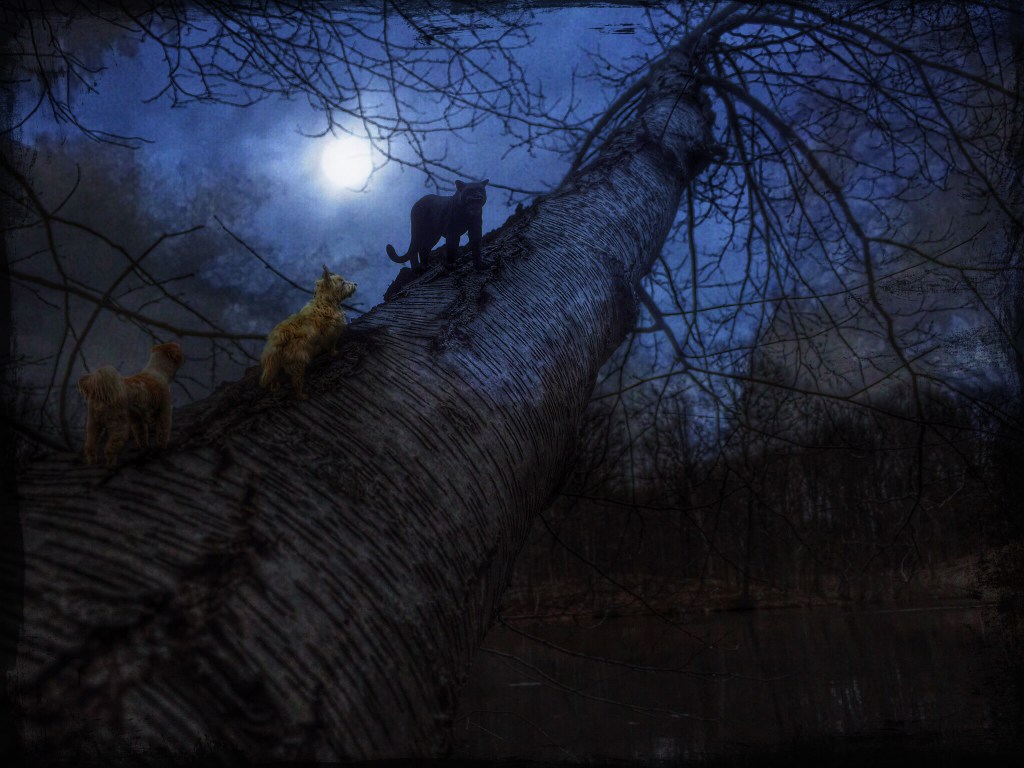
    The full moon lit our way. Then we were climbing along a thick tree branch hanging out over the water. Finally, Panther stopped and turned to us.

    “What do you see, little doggies?” she asked.
    “The full moon?” Maya replied.
    “Yes, in Libra tonight. A time of awakening.”
    “I usually like to sleep first before I wake up.” I said, trying to make light of a scary situation.
    “You’re always asleep, Shih Tzu, dreaming one dream, everyone – dogs, cats, humans. A collective dream of hate and destruction covering the earth and plowing over nature.”
    “Are we really sleeping and this is a dream, a collective dream?”
    “Yes, this experience right now is the reality.”
    “We met Mother Gaia.”

    “She who is everything and nothing, sacred Feminine, the darkness and the light. You were lost and she came to teach you to no longer be afraid – so that you may no longer live in ignorance.”

    “I’m tired and hungry and want to wake up from this dream and go home now, please.” I said to no one in particular.
    But Panther ignored me.
    “Ignorance drives the machine and greed is the fuel. The answer is within reach; but few reach for the solution.”
    “How can humans change if they can’t see what they are doing?”

    “Oh, they see it; but they are trapped. They have to wake up; but the world is in denial and totally addicted. Only the addicted can remain in a constant state of war, a war against each other, against themselves; mostly against the Mother of All; against their only source of life.”

    She was moving fast down the branch and we turned to follow.
    “All species have to live within nature and humans must slow the technology that destroys nature.”
    “Yes, but that technology makes us comfortable, without that technology we can’t go on. It’s seductive, addictive, and I like it!”
    “Exactly,” said Panther over her shoulder. “People have become autistic to what is happening. The destruction of a species, who see no evil, who hear no evil, who ignore the horror around them.”
    “Is there a price we must pay, Panther?” I asked.

    “Of course, Shih Tzu, there is always a price and unfortunately for humans it is one in which all that is known may have to be destroyed so that a new story can emerge.”

    “Whoa, boy!” I said, “I hope that won’t happen in my lifetime.”
    “That’s what people always say! They live their lives as if they won’t be here to pay the consequences.”
    “So is it possible to put an end to war, hunger, and poverty? No suffering?”
    “Difficult to predict. It will take a lot of work if you are seeking peace and tolerance between all cultures.”
    “But,” chimed in Maya, “humans don’t know what peace and happiness are. They know war and suffering, even pain and despair, they are comfortable with those, but all the good stuff seems beyond their understanding.”

    As the dark thickened around me I whispered, “I think I experienced something special as we explored the Garden Paradise today. You are saying that this is what we can have, this joy and happiness?”
    “If humans are willing to detach from their addiction for material pleasure and gain, then yes, it is possible.”
    We walked through the darkening night in silence thinking on this. By now I was tired and Panther had moved ahead in the distance. We stopped at the bottom of a steep mountain of stone and watched Panther run to the top.

    *Here is a free PDF download of Maya Awakens to read and share with family and friends:  Maya Awakens PDF

  • Age of Second Nature

    It is long past the time of Christ
    Long past the days of Buddha and Mohammed
    Great teachers come to save us all.

    Long past the age of innocence
    Before technology taught us too much
    Changed our world and our perception of this world.

    Those were the days when First Nature reigned supreme
    The days before humans decided to play God
    When prophets taught how to embrace our humanity.

    Made in the image and likeness man declared
    “I am God”
    And woman sprung from a rib are less than human.

    350 billion years of evolution and we are the result
    Humans attempting to understand
    What it means to be human
    While our clones wait in the wings.

    Machines are devouring our world
    Letting the work be done for us
    So we will have more leisure time to think, to play
    To love and make love
    To have more time with our children.

    To do nothing at all if the spirit so moves us.

    We have created the age of Second Nature
    Humans playing God playing humans
    And to humans, this has become very confusing.

    (Excerpted from Lifting the Veil: Human~Nature)

  • INTERVIEW: Debra Fernandez

    It was the late ’70s. I had heard about my brother’s new girlfriend from a few sources. I remember thinking that she must be pretty outrageous to take on the eccentricity of my big brother, and I was right.

    We met at the gala party for the Krewe of the Knights of Sant’ Yago, the night her father was crowned as King. Debra schmoozed the costumed crowd with a charm bred from her Cuban roots. I immediately recognized a kindred spirit. The years that followed found us dancing the Jota alongside Jose Molina, living together in a fourth-floor walkup in New York City, watching each other grow into mature women intent on crafting a life out of what we loved. We have been friends for over 40 years, and there are only a handful of these special relationships you will experience in a lifetime.

    Currently Debra is a full professor and Chair of Dance at Skidmore College in Saratoga Springs, NY. What many people don’t know is that Deb is also an accomplished pianist and composer. Plus, tucked away in her life’s resume is a unique short film she co-created with Carlene Bellamy, back in the day. I asked her to share her take on the creative process, and she was happy to oblige.

    How would you describe yourself as an artist?

    Malleable, confident in my craft, comfortable creating “from the mystery” (as a friend once pointed out), a collaborator, still able to be surprised, musical…and still learning!

    My teaching philosophy is along the lines of the quote by Shunryu Suzuki, “Each of you is perfect the way you are … and you can use a little improvement.”

    Has it changed over time, and where are you now in your creative process?

    Yes, it has definitely changed. As a younger choreographer, I was much more interested in creating movement in specific genres of dance, such as jazz or ballet. I was also very driven by music. As I continued to choreograph over time, which also means the aging process, I began to develop methods of choreography that would not depend on my diminished instrument to generate the movement. I began to rely on my dancers to invent the movement vocabulary through the various prompts and concepts I would assign them. My role would then be to create a kind of “group vocabulary,” whereby we all shared each other’s physical responses.
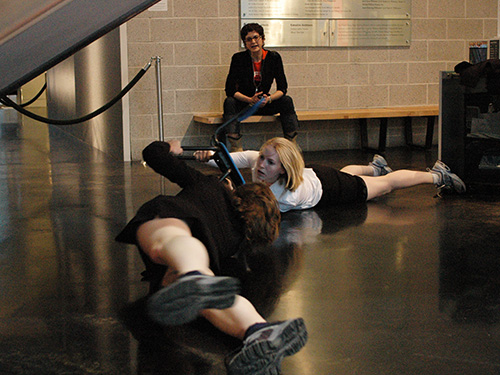
    As this process developed, I began to see that each new creation was a conglomeration of each particular group’s energy and mindset. I found that this enlarged my scope of creativity and allowed me to act as a kind of archeologist that would unearth treasures on each particular excursion. In short, I found myself more comfortable in the role of one who shapes and edits an experience rather than imposes one specific idea, theme, or personal movement style on a group of dancers.

    Sometimes it would surprise me that without ever intending it, a compelling personal statement would reveal itself through a movement vocabulary I did not invent or construct. At this moment in my creative process, I am very much at home with not knowing what is coming and whether or not it will be “good.” I enjoy the day to day process of “playing” with bodies in space and in time. It’s like a good crossword puzzle. I’m not looking for the BIG MOMENTS any more.

    Or, as Merce Cunningham put it, “Climax is for those who are swept by New Year’s Eve.”

    Did you grow up in an artistic family?

    I don’t know that I would call them artistic in the sense of the fine arts, but they loved music and dance, and probably each had more artistic yearning than they might have given voice to. I have a sneaking suspicion that I stuck with what I was doing because I never got married or had children. Who knows how that would have impacted my choices. I was able to concentrate on my artistic pursuit in a way that was not an option for my parents. I’ve often been accused of what writer Annie Lamott would say, “I may not be much, but I’m all I think about.”

    How did you satisfy your creative nature while working full time?

    I was fortunate enough that my jobs were always in my field, and I had the distinct privilege of being able to hone and perfect my craft as part of my daily duties. There is no way I would have become the choreographer I am today without this day to day opportunity. The old saying “Those who can do, those who can’t teach” may be true on some level, but didn’t make sense for me. I never really loved performing and considered teaching a truer vocation. It has informed my artistic work and helped me find a voice that would, no doubt, have remained muted. As I began to develop my interest in choreography, it was instrumental in discovering how to coach, design, and use the physical body to express an emotion or psychological state.

    What creative work did you love doing the most, and why?

    My most beloved creative projects have been ones that I shared with phenomenal collaborators who enlarged my ideas and allowed me access to levels of creativity I might not have reached on my own. And, by this, I mean, the collaborative designers but also some amazing performers I’ve had the good luck to work with.

    How do you share your art today with others?

    Again, I’ve been lucky to work in an institution (Skidmore College) that values and encourages the arts. In addition to two regular faculty concerts per year that I take part in, I continue to create works on an ongoing basis for different venues in my area, particularly museums. I’m almost always working on something, and that’s really what matters. I embrace the Zen notion of working without focusing on results. Instead, the processes are what matter. In that way, I am sharing my art with the dancers involved in the rehearsals and not just focusing on an audience. It is a wonderful way to spend time with people, intimate, but without a lot of conversation.
    What intrigues you the most about the creative process?

    The blank slate. The fact that where there was once nothing, something will manifest and fill the space. I am always surprised that even when I enter into the process without an idea in the world, one will emerge.

    The creative process is the mystery that we all live every moment, but we don’t always give ourselves the space to pay attention to it.

    It involves listening, choice-making, leading, following, questioning, faith, and many other wonderful aspects of attention. When we enter into a creative act of art-making, we are usually focusing on a specific project, but Life itself is the ultimate creative process.

    Looking back, would you have lived your life differently?

    Probably not, because I lived it the only way I knew how at each particular moment. Of course, there are things I know now that would have been very helpful in certain situations, but growing and learning as we move through life is the whole point. There’s no way I can retroactively imagine that I could be the 67-year-old woman I am now when I was a young lass in my 20’s. One thing is probably for sure: it wouldn’t have been as much fun!

    What would you say today to your younger self?

    That I should have bought a house in Saratoga Springs in the early ’90s. I was warned, but commitment-phobe that I was, I never signed on the dotted line. I’d be sitting pretty today. Aside from real estate, I would have urged my younger self to stick up for herself more and not be afraid of ruffling feathers.

    What would you say to young artists coming up in the world?

    Well, as a teacher, I say things to them all the time. I’m not sure they are listening, and that would be understandable. They are entering a vastly different world than the one we experienced. One piece of advice that will probably always be true is along the lines of “follow your heart” or “follow your passion.”

    There is a certain kind of listening that an artist needs to do because who you are going to become is not immediately evident to those around you. It requires a sort of dumb belief in yourself.

    Hopefully, as I did, you will meet key people who will point the way, believe in you, and help you find the treasures. And, in that way, teachers can be incredibly valuable; I had an early teacher who said something to me that gave me the juice to believe in myself as a dancer. She probably didn’t even know it was so impactful. So, Carol, wherever you are, thank you.

    Presently, I’m reading Adam Gopnik’s book, At The Strangers’ Gate, and it’s about New York in the early ’80s, which is when I was there. With regards to the younger artists of today, I strongly related to this passage: “We tolerated woeful inadequacy in sure and certain hope, as the Anglican prayer for the dead would have it, of eventual deliverance. When I go to the homes of the twenty-somethings now, I sense that they live on higher floors, but have lower ceilings.”

    Delia asked me how I wanted to end the interview, and it got me thinking about endings in general; they are such an important and key moment in a dance. Sometimes they are definitive and explosive, sometimes pensively ambiguous so as to allow an audience to form their own conclusions about the piece, but one thing is for sure: they all end. As I begin to think about the ending that is retirement and what a long and rich chapter it will close, I admit to being a bit nervous. But, as the Jungian therapist, James Hollis, tell us,

    “there is a will within each of us, quite outside the range of conscious control, a will which knows what is right for us, which is repeatedly reporting to us via our bodies, emotions, and dreams, and is incessantly encouraging our healing and wholeness.”

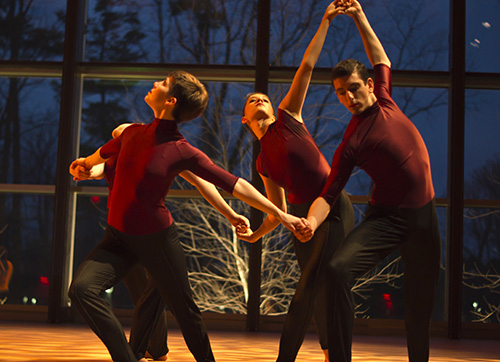
    Not unlike the creative process, …which is where this interview started! To know an artist you must see their art. I suggest you begin with Swan Song, a piece I choreographed in 2010. Music is by Richard Danielpour, with the Hyperion String Quartet. Dancers include Julie Gedalecia and Jacob Goodhart with Rebecca Greenbaum and Angela Cascone. Thank you for taking the time to share my journey.



  • INTERVIEW: Joanne Jaffe

    “Finding something you love to do is a real gift. When the world seems topsy-turvy, I can escape to my studio, and for the time I’m working, find real peace and happiness.” ~Joanne Jaffe


    If you are lucky, there are a handful of people who come into your life and change your understanding of what is possible. In 2006 a woman knocked on my door to remind me we had met briefly a few years before, and she would now like to become my friend. Her name was Joanne Jaffe, and she had tasked herself with a tremendous challenge.

    She had come to see that her artist parents’ paintings and sculptures found new homes, in private collections, museums, colleges, and women’s studies programs.

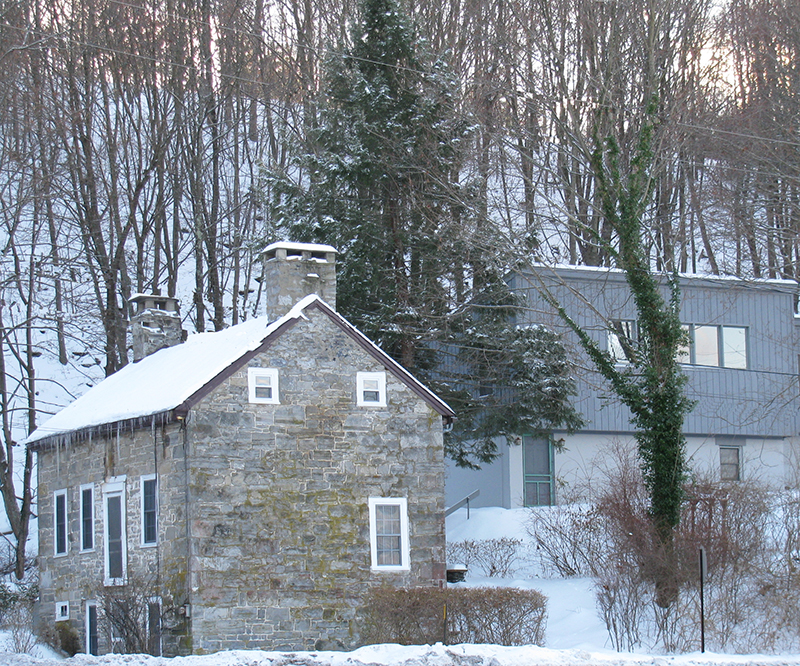
    Twice a year, Joanne would travel from her home in Santa Monica, California, to Blairstown, New Jersey. There Ben and Evelyn Wilson had a small stone house with a studio on a hill in the back.

    And to this house, curators came from across the northeast to view the collections. They left with a treasure trove of extraordinary art.

    As for Joanne’s and my friendship, well, it was a beautiful thing. She would arrive in the Fall and Spring, the perfect time for long walks along the Paulinskill Trail, past the river, lakes, and forests. We would sip 50-year old Scotch, left behind by her teetotaling parents, all the while examining thousands of paintings by her father, and hundreds of sculptures by her mother, Evelyn.

    It took a few years, but Joanne’s tenacity and commitment to honor her parent’s legacy was complete. She gifted the house and remaining paintings to Montclair University and left Blairstown for the last time. She returned to California, where she has a thriving career as a ceramics artist. Many were sad to see her go. Here now, I share her 50-year journey as a creative artist in her own words.

    How would you describe yourself as an artist? 
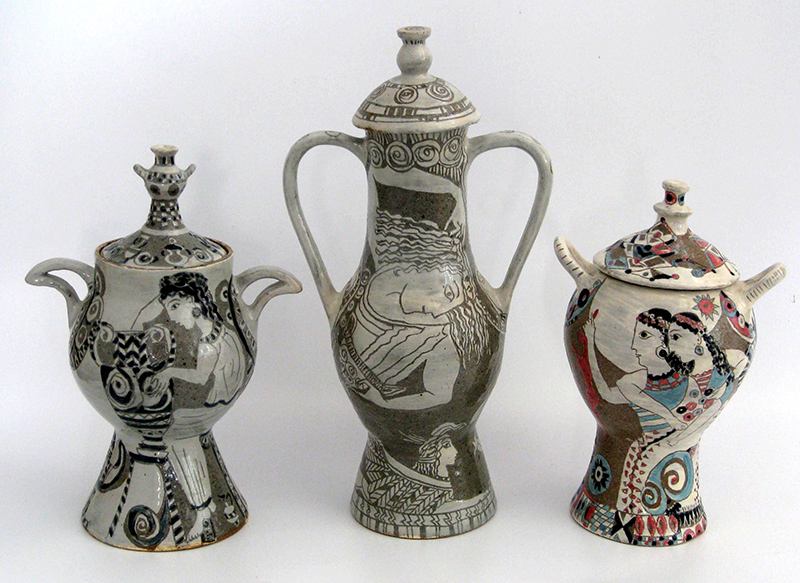
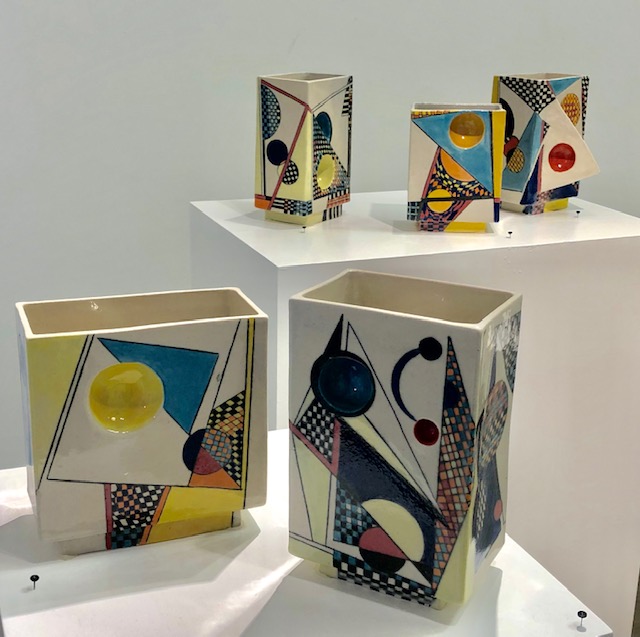
    I am a ceramics artist. I do functional and non-functional ceramics, concentrating on surface decoration.

    Has it changed over time, and where are you now in your process?
    I started doing ceramics about 23 years ago, a few years before retiring from being an editor, mostly of magazines. Prior to doing ceramics, I worked in a variety of mediums and, throughout my life, have particularly enjoyed drawing.

    I began taking classes in ceramics—at adult ed, community colleges—and started as beginners do, making pinch pots and slab pieces. After a few years, I started learning the potter’s wheel. Today I mostly work on the wheel, though I do slab work as well.

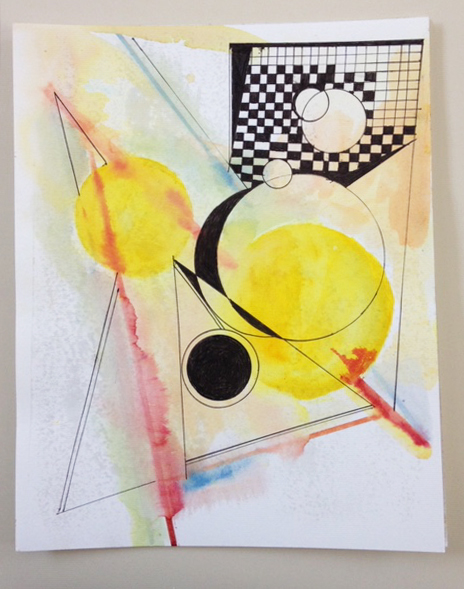
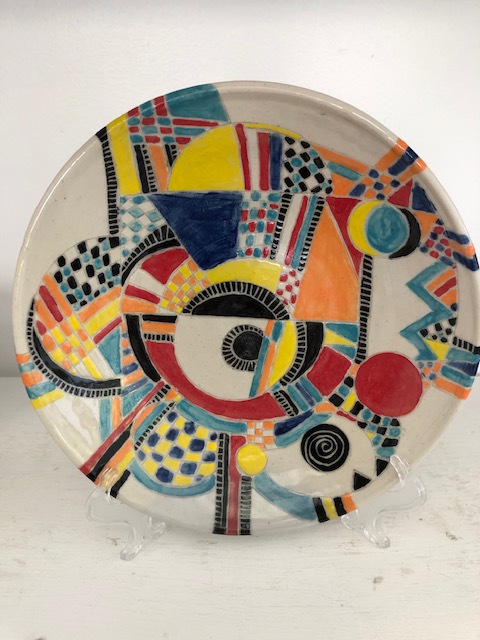
    As my confidence and competence grew, I began drawing, carving, and painting on the surfaces of my pieces. This gave me a way to incorporate my love of drawing into my ceramics work. I generally work in a series and will pursue related imagery for some 12-18 months. Often the imagery draws upon an early ceramics tradition such as Pre Colombian pottery, ancient Greek pottery, Chinese bronzes. In the last few years, I’ve been inspired by Kandinsky and the Russian Constructivism. This is the first time I’ve completely embraced my love of abstract imagery.
    Right now, I’m mostly making functional pieces: cups, bowls, plates, vases—each of which is a little painting.
    Did you grow up in an artistic family?
    I grew up the only child of an abstract painter father and sculptor mother. One of the things we did as a family was to draw each other. Until I was a teenager, my mother and I would spend every Saturday at my father’s Chelsea studio, looking through art books while my father painted. On Sundays, we’d go to the Manhattan museums. Art was like a religion in our household, and, growing up, I got a thorough steeping.

    How did you satisfy your creative nature while working full time?
    I studied English in college, enjoyed writing, and continued to draw. I wound up almost accidentally, concocting a career as a writer and editor for art and design publications. I worked for the Los Angeles County Museum of Art as an editor in the 70s. For Architectural Digest in the 80s, then was the founding editor of Angeles Magazine, an LA art and design publication from 1987-91. In that way, I was able to pull together many of my interests.

    Still, I had a pattern of every few years taking a break from wage-earning to do something more personally satisfying and art-related.

    By living frugally, I was able to afford stints during which I would make soft-sculpture dolls or wearable garments made of feathers, or jewelry assembled from hardware. And so it went—until I discovered clay and got hooked.

    What creative work did you love doing the most, and why?
    Besides drawing in general, I think I’m happiest right now because I’m working with clay, a delightfully sensual medium. After years of severely limiting my palette, I’m luxuriating in color these days. I call my most recent work, my “Happy” series.

    How do you share your art today with others?
    I show my work at a gallery in Santa Monica, the Lois Lambert Gallery/Gallery of Functional Art. Every few years, when I’ve assembled a sizeable collection of work, I have a holiday ceramics sale in my studio. I invite friends, friends of friends, neighbors, etc. I’ve continued to fire my work at an adult ed class, where I interact with other potters and have made many friends with shared interests. We inspire and learn from each other.

    What intrigues you the most about the creative process?
    What intrigues me the most is what it does for my mind. It reveals who I am by manifesting how I work and what I have to say.

    It provides me with a “quiet place” where I can focus on what I am doing and exclude all other thoughts and concerns.

    It also provides me with a way of connecting with other artists and people interested in art.

    Looking back, would you have lived your life differently?
    There are aspects of my life, choices made, that I would do differently knowing what I know today. Some of my relationship choices; career paths, perhaps even leaving the east coast for LA. But as far as making art is concerned, I don’t feel that I had much choice. Some kind of art was bound to come through.

    What would you say today to your younger self?
    Not to worry so much–that things generally work out pretty well if you put good energy out. Pay less attention to your inner state and more to the outer world. Be as conscious as possible.

    What would you say to young artists coming up in the world?
    If you possibly can, find a day job that you enjoy and where you are learning something useful and personally meaningful. Don’t put too much commercial pressure on your art.

  • The Unexpected Shot

    Did you manage to find any interesting B&W negatives?
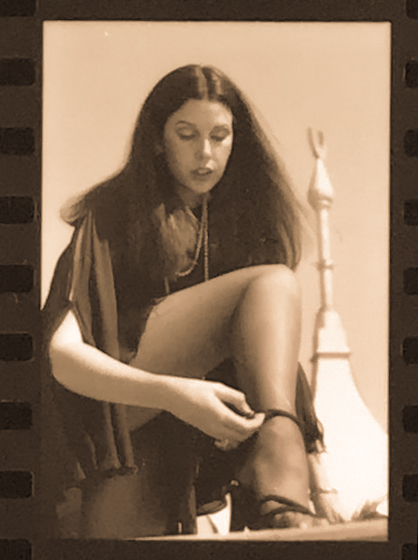
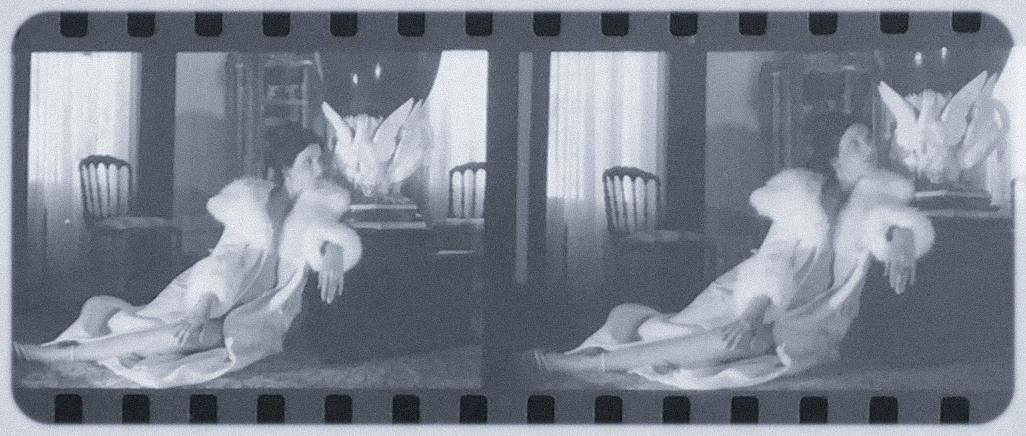
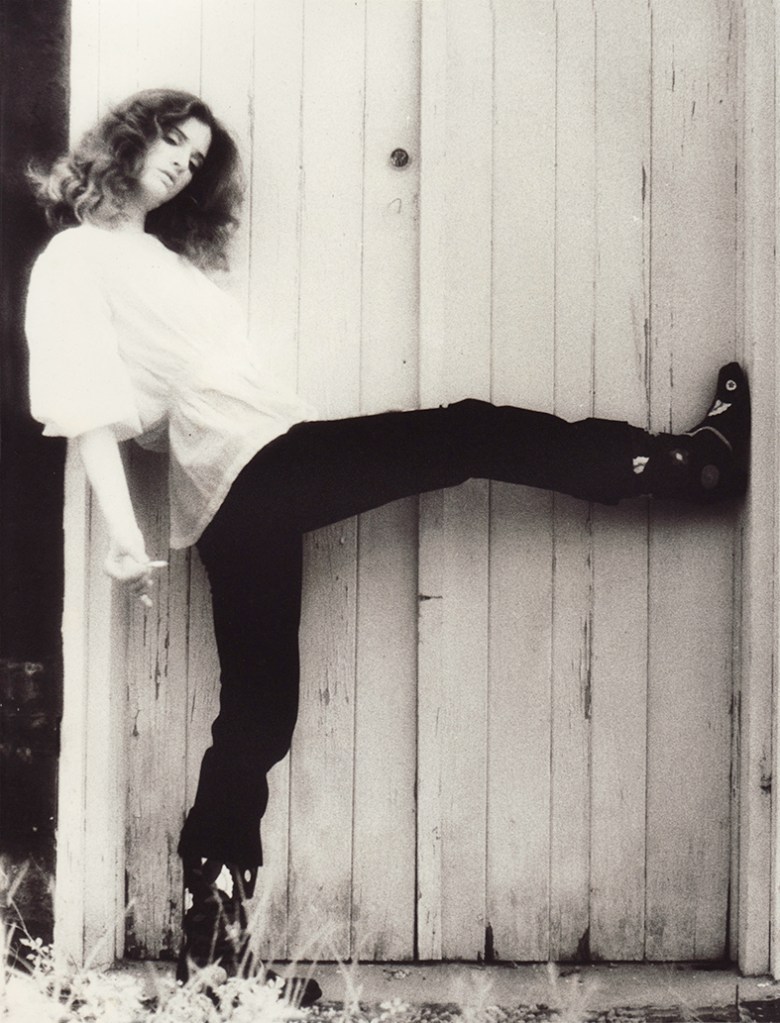
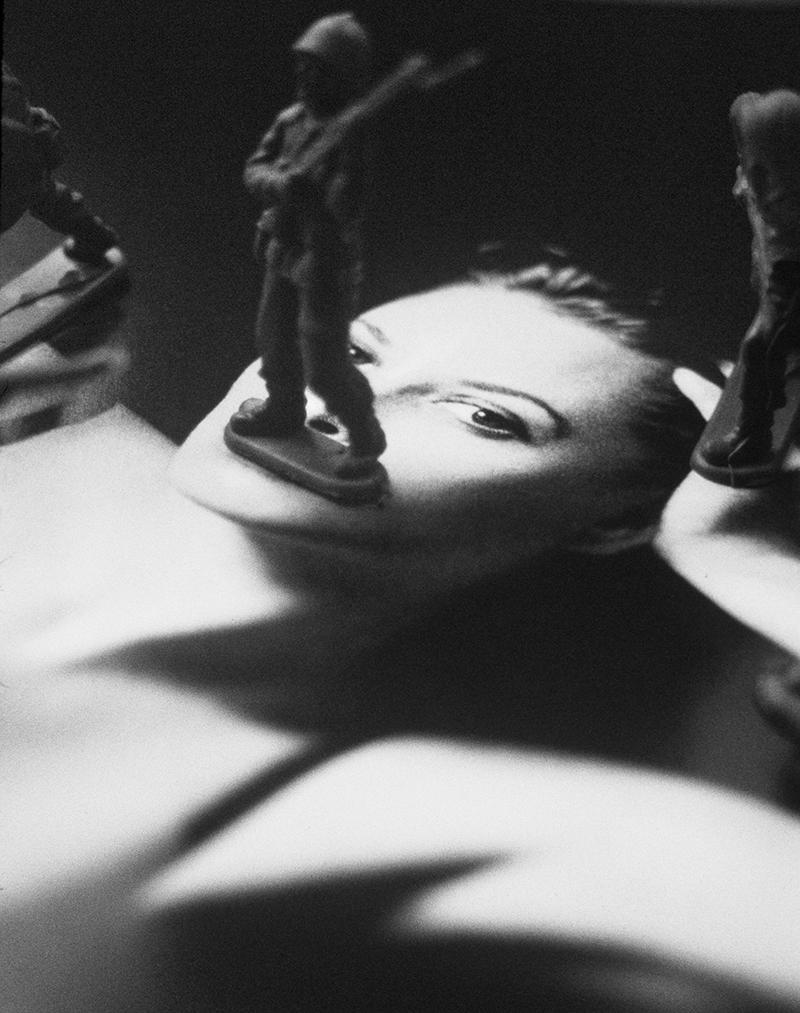
    Actually, I did find a few. This one photoshoot, in particular, stands out in my mind, and I’ve always wanted to scan the negatives digitally and see what it looks like today. What you see here is taken from the proof sheet. I remember it all so clearly. I think it was 1975. I had already made a bit of a name for myself photographing aspiring actors and models, when I was hired to shoot Mallory, a fellow thespian. She was a tall, gorgeous brunette with a closet full of designer clothes. Fortunately, she was open to my suggestion that we wander downtown Tampa shooting in different locations. Tampa was not what it is today, all modern office buildings and fancy streets. Then it was a bit dodgy, a rough-looking southern city, with a river cutting through from the bay. It had its charm if you looked real hard….so we went looking.

    Where did she change her clothes?
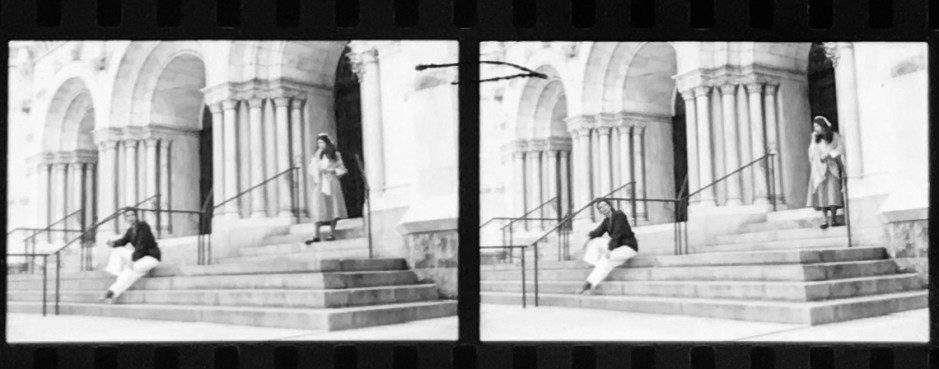
    Anywhere we could find some privacy. I remember it was a winters day in Florida, which made it possible for her to wear a wool coat with a fur collar and hat. She brought along a full set of expensive luggage, and we shot in the Tampa train station, then later changed clothes and had her on the steps of the downtown cathedral.

    I think she was wearing Yves St. Laurent for that or maybe it was St. John.

    Anyway, small crowds would form to watch, which is always motivation for an actress. At the cathedral, I had a friend show up wearing her pious, Catholic girl outfit and had her exit the church casting admiring glances towards my model. Really hokey, but it made for some contrast.

    How did you end up on the roof of Tampa University?
    Well, it was my alma mater, so I knew my way around the building. We then shot in the Plant museum on the first floor. The place was once a hotel built by Henry B. Plant, the railroad baron. He ran the train down the west coast of Florida, and Flagler took the East coast. Teddy Roosevelt and his Rough Riders stayed over on their way to the Mexican war. The actress Sarah Bernhardt performed there, the dancers Denise St. Denis, Anna Pavlova, and Isadora Duncan had creative moments in those rooms. It was history for sure, so I wanted to capture a bit of that in this photo shoot.

    Then you had a brilliant idea?
    How did you know? The day was winding down, Mallory was getting tired, her makeup was beginning to glow in the afternoon sun when she pulled the last dress from her traveling trunk. She held up a sensational wrap dress by Diane Von Furstenberg, who was all the rage when she debuted her collection the year before. Lightening struck!

    I remembered there was a Navy destroyer docked in the Tampa port. Someone must have told me, or it was in the news, but I thought it would make a great shot.

    Mallory managed to change in the car and strapped on a pair of black spike heels I never saw coming. I steered my red Ford Pinto to the docks, and when we rounded the corner, there was the ship, and boy was she a beauty.

    Were there sailors on board willing to cooperate?
    Of course! The ship was tied up to a pillar just tall enough for the statuesque Mallory, especially in those heels. The sailors had been swabbing the deck when we walked up, and I asked if they would play along. They were happy to oblige. With the catcalls and whistles Mallory got right into the action and, well, you can see for yourself, she needed no prompting from me. The picture says it all.

    And that was that? You took the pictures and then left?
    It appeared that was how it would play out, but then I noticed more sailors were gathering on deck. I figured they were not going on shore leave, and the news of two hot women posing dockside had spread through the destroyer like wildfire. Unfortunately, I had just shot my last roll of film, so I couldn’t capture the moment, but you’ll have to take my word for it.

    Suddenly, there was a roar from the sailors on deck, followed by cheering and yelling. I turned around to see four Naval officers walking down the gangplank. They were dressed in Navy whites, impeccably ironed, shoes with a high black shine, officers bars on their shoulders, young and handsome.

    It was one of those moments where you just have to give praise to the Almighty.

    And no film?
    Dammit, all four rolls of my Kodak black and white was done. That moment taught me to always leave a few shots for the unexpected because life is full of surprises.

    So what happened?
    Well, the Navy grunts were going crazy. In this age of #MeToo, a woman might be offended, frightened enough to run, or watch it all go down with a smile on her face. Men without women for too long is not the best mix. Anyway, the officers approached us in a slightly threatening way, as if we were trespassing and shouldn’t be there. But, we were hip to the moment and knew they were playing to the audience on deck. Every one of those sailors would have given a month’s salary to be in their officer’s place, and they knew it…so did Mallory and I.

    As they approached us, the officers removed their hats and placed them under their arms. Big, handsome smiles, a bit of small talk about what we were doing, you know, dragging it out for the sake of their men watching. Then an invitation to dinner, except they were leaving port in a few hours. Perhaps next time. And the sailors went wild. It was sweet, funny, but getting a bit crazy. We thanked them for the invitation, and I moved away to let Mallory have her Marilyn Monroe moment in that dress and those shoes. She tossed her long, dark hair, took a spin (not sure how she managed that), and blew the boys on deck a kiss. We were followed by a few hundred eyes, and the cheering of men too long pent up, as we casually (not sure how we managed that), walked back to my car. I daresay it was a photo shoot I will always remember.


  • Photography: My Early Years

    In which I continue to interview myself.

    What was your first camera?
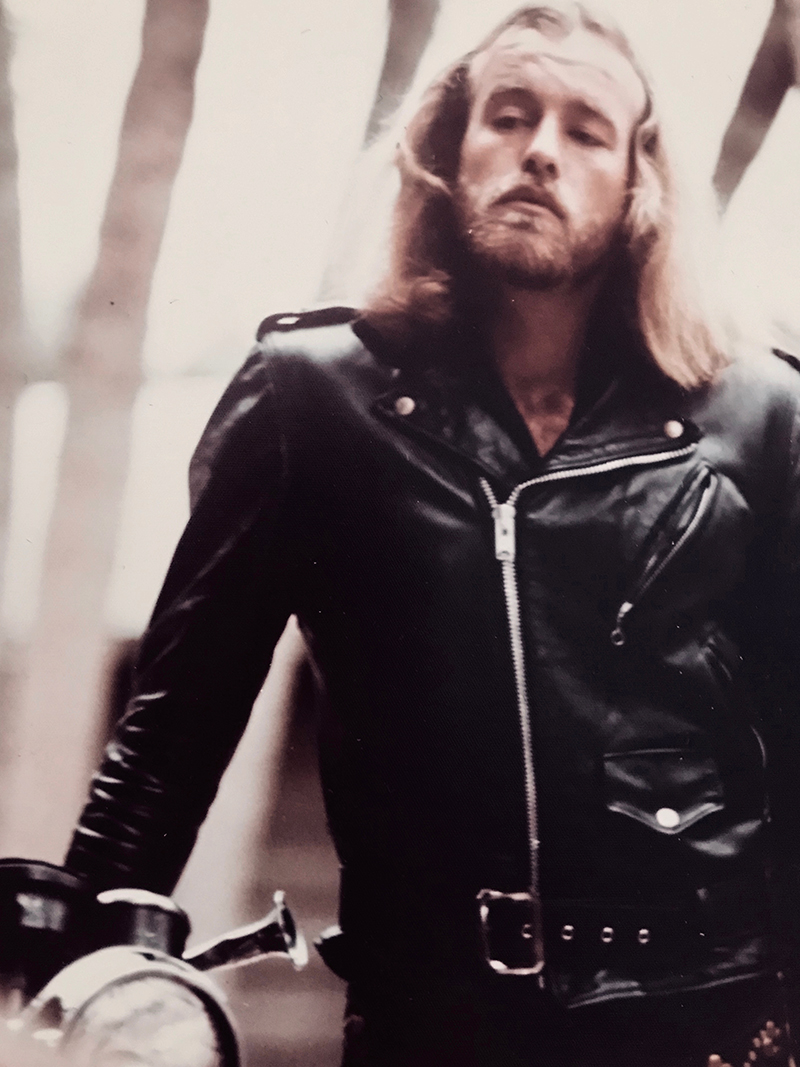
    That’s a bit like asking the name of my first boyfriend; because the day my mom gifted me her old Zeiss Ikon Contessa, I fell in love. It was as if she handed me a ticket to see the world in a creative way. I knew from an early age that I was an artist, but with little natural talent for drawing pictures. With a camera in my hands, there was no longer a question of what I could bring to life, and I set out on a grand adventure.

    What exactly is a Zeiss Ikon Contessa?
    Briefly, this particular style was a 35mm folding/rangefinder camera that was manufactured by Zeiss Ikon AG in Germany. It had a sturdy little body with a Tessar Zeiss-Opton T, 45mm f/2.8 lens. To focus, you had to match the yellow rangefinder images in the finder. It had a brown leather case that was always dangling from the bottom when I was shooting photos. If you are into vintage cameras, there are plenty to be found online at pretty reasonable prices.

    What was the year you received the Contessa?
    Probably around 1970. I remember taking it with me when our theatre group performed at Yale University as part of a play festival. I took the camera for a walkabout all over New Haven. The cemetery was a photographer’s dream for graveyard sculptures.

    I remember coming upon a gravestone that had my exact name, Mary Delia Quigley, with the date of birth and death. I quickly snapped a picture, excited to get home and make a print.

    Ironically, it was the only shot that did not take. When I printed the proof sheet, the space on the negative was completely white. Yeah, I know, signal the eerie music.

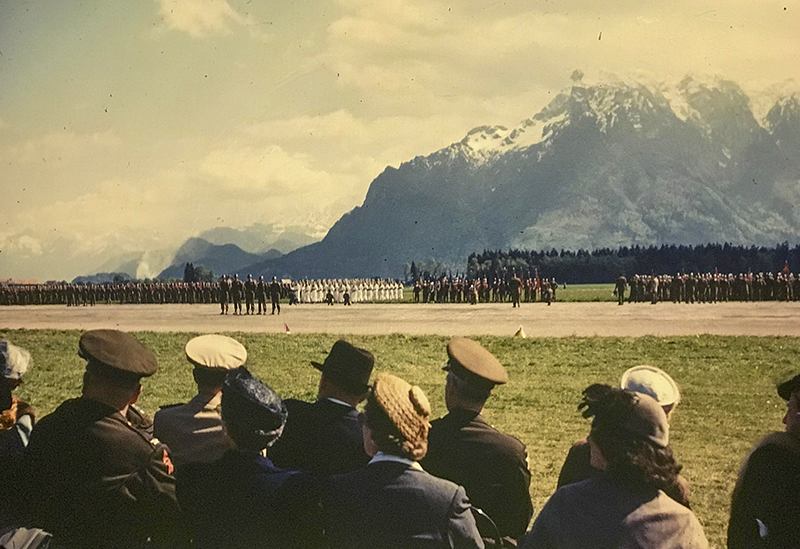
    My mother must have bought the Contessa in Austria. My father received orders for Salzburg in 1951. Mom packed up my two brothers plus me for a four-year stay in Europe. Looking back through the color images she captured on Ektachrome slide film has made me realize what an exceptional photographer she was.

    Sounds like a book in the making?
    Actually, yes. It is planned as part of the Lifting The Veil series, this time on Mother~Daughter.

    So, your mother set you on the path?
    Or the lifetime journey to parts unknown. Photography became my passion, and in those early years, I began to see it as a possible career. What happened was, right after I graduated from college, I was teaching special education in a Catholic daycare center in Tampa, Florida. It was located in a strip mall in what was called the Projects.

    From time to time, a truck would pull into the parking lot, and a brisk trade of goods would take place. A Flash sale, if you will. Thus the term, “it fell off the truck.”

    One of those times, a brand new Minolta 35mm camera emerged from the back of the vehicle just as I was leaving school for the day. I knew the dealer, as his two children were in my class, and he called out to me, held up the Minolta, lifted his eyebrows while flashing five fingers ten times. Always dramatic that dude. Fifty dollars, and she was mine. Ah, what’s a photographer to do? He then discreetly handed me the camera, as I equally discreet palmed $50 cash, and the deal was struck. This then began the next part of my journey, and boy oh boy, did I have fun.

    Unfortunately, not much has survived from that time. I was traveling the world and storing my negatives in moms’ garage. Amazing what the Florida heat can do to film negatives.

    Ever have any formal photography training?
    Those were the days when there were photography stores all over town. They were the hub of the photo scene with the coolest guys working behind the counters. I was young, hot, and eager to learn. When I started taking classes, you can only imagine the extra attention I was given. It gave me a chance to explore different camera formats, film brands, paper, and all the parts that went into printing your own photos.

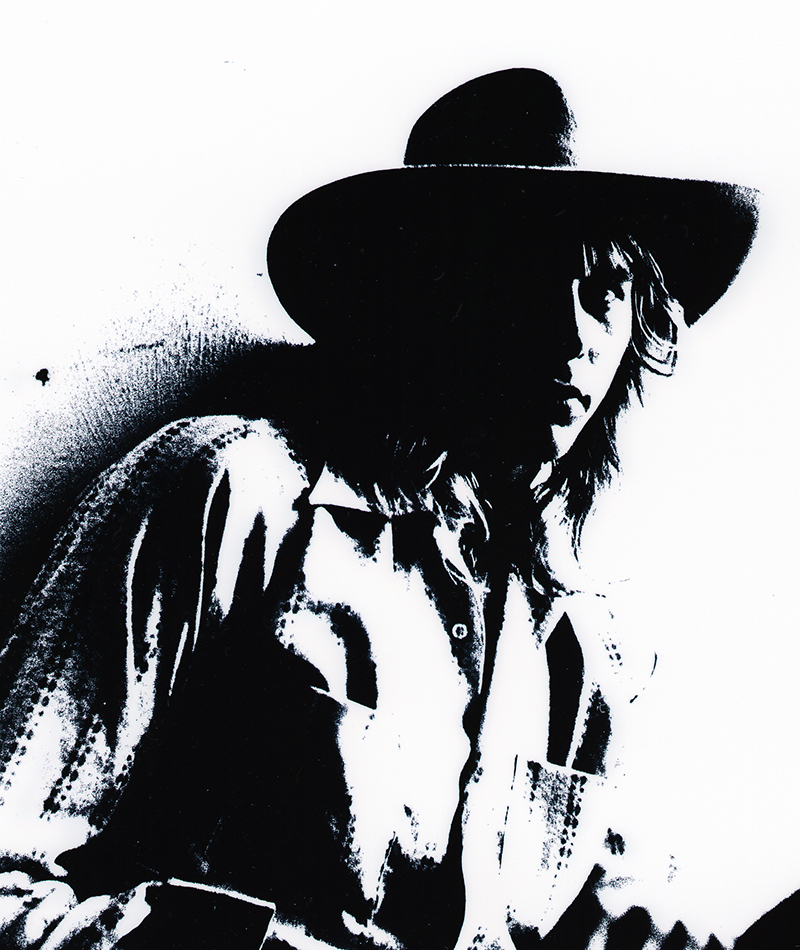
    Besides the Minolta, I was shooting with a Rolleiflex. With dual lens and 120 film, the negatives were much larger than the 35mm, so you could make big prints. It was the camera Vivian Maier used to capture her street photography. You could carry it low, making it unobtrusive when out amongst people. With the larger format, I was able to create some interesting effects with those negatives. Today I can work in Photoshop to get much the same result.

    What type of scenes were you shooting?
    Working in the theatre and with the Tampa Ballet Company, I began photographing actors, dancers, and models who were looking to build a portfolio. I would take them out to different locations and shoot them without anything but the Minolta. The 50mm lens was perfect for portrait work, which was a good thing because I couldn’t afford to buy an expensive lens. I was also shooting local bands and did a whole series on my young students. Everyone loved posing for the camera, so it was a win-win situation.

    Did you have a darkroom?
    As I was often on the move, I brought it with me. It was set up in the kitchen in one place, and I would develop and print at night because it was just so hot in Florida.

    Not a lot of air conditioning back when, so there were drops of my sweat mingled with the developing chemicals, which may have given the prints a longer life.

    At dawn, I would peel back the curtain, have a morning smoke watching the sunrise then head off to sleep for most of the day.

    So what came of it all?
    Not much. I entered a few art shows and won prizes. I had this idea to sell 8×10 matted photos on the street corner in downtown Tampa at lunch hour. Naturally, I dressed very artsy, with a bit of Parisian flair. Priced the prints at $10, and with those sales was able to cover the costs for film and darkroom chemicals. I like to think those photos are out there somewhere, probably at the bottom of another Boomer’s trunk in the attic. I didn’t stop taking photographs, but my life changed, and photography as a career took a back seat. I do have some great memories of those photoshoots, though, and will share a few in blog stories once I find the box where I stored them.

  • Part 5

    Shall we narrow down self-publishing advice to a bullet list of does and don’ts?
    I find bullet lists to feel so unfinished, and yet they can provide just enough information to get you over the rough parts. By that, I mean STUCK. Your feet mired in quicksand, and all your best intentions are quickly sinking with you.

    This is when you Google the top five tips to help pull you free and on your way.

    You may have already tried them, but just reading through again may inspire new action. Today there are many moonlighting editors, publishers, and writers on the web looking for work, and their tip sheet is the lure.

    Is this a good thing?
    Of course! You have to remember that the self-publishing industry is a big business now. It has put a dent in the publishing industry, and rightly so. I heard an introduction to a self-publishing podcast articulating there is now no middle man between author and audience.

    However, you still need the experience and knowledge of experts who know how to put a book together and bring it to readers.

    That said, I have been lured into many websites and have folders of tip sheets to show for it. Most are very useful at different stages of the writing, publishing, and marketing process, so I continue to use them for reference.

    What 5 tips can you give for first-time book publishers?
    1. Read other people’s books for insight and how-to’s. These are essential to inspire the creative through the dark mind of doubt, resistance, and fear. Consider The Artists Way by Julia Cameron to begin.
    2. Take online courses in writing, web design, and self-publishing. I joined Sebastian Michaels’ Photoshop Artistry course, and it continues to give me the knowledge, education, and support to create the photo art for my books. I also took both web design and self-publishing courses at a local community college. I learned how to write by writing every day.
    3. Read online blogs, to learn from others who are doing what you want to achieve.
    4. Check out Joel Friedlander’s website, The Book Designer. Not only is he an expert in the field of publishing, but he is also very generous with free content. He loves to give bullet lists of what you need for all areas of publishing and was a huge help in taking me from text on my computer to an actual book in my hands.
    5. Another expert to follow is Sandra Beckwith at Build Book Buzz. A book marketing expert, the knowledge she shares is invaluable for self-published authors. She’s accessible to readers and replies promptly to emails. I’ve learned a lot from watching the way she promotes her own work. Sandra successfully walks her talk, and you can’t get much better than that.

    What is your #1 piece of advice for someone ready to write a book?
    Let your stream of conscious put 500-1000 words on the paper (or computer). Then get up and take a walk, make a cup of tea or call it a day. Come back to the text later and clean up those run-on sentences, grammar issues, and spelling. Edit, edit, and edit again. I have a subscription to Grammarly that has made a positive difference in my writing. I don’t rely on it for the final edit of my manuscript, but it works as a house cleaner who comes in and cleans up the mess I’ve made.

    Are you receiving any compensation for referring the people in this blog?
    Heavens no! They may know of me from pestering them with emails on occasion, but I recommend their work because they are good at what they do. They each helped me to create, write, publish, and market four books in three years. If I can do it, believe me, so can you — just my way of saying thanks and passing it forward.

    NEXT: So You Want To Be A Photographer